23 September 2019

Why do people have short memories? The Thomas Cook saga


Everyone is upset over the collapse of Thomas Cook's UK business. However, there are some key facts that have been forgotten. Hint its not necessarily British ;-) .

Thomas Cook's storied history has been somewhat disjointed in recent years. So let me share with you some of my understanding of the history that I recall. The clue was that despite everyone's focus on the brand name - in reality it was more of a German and Chinese company than it was UK.

So let's start with when the company was a UK Nationalized industry. That ended in 1972

1972 - Privatised and bought by a consortium of Britain’s Midland Bank, Trust House Forte and the Automobile Association.
1990 - Thomas Cook becomes the world’s leading foreign exchange retailer when it acquires the retail foreign exchange operations of Deak International. It provided the gold standard in Traveller's Cheques.
1992 - Westdeutsche Landesbank (then controlled by Otto Bisheim , Germany’s third largest bank, and the LTU Group, Germany’s leading charter airline, acquire the Thomas Cook Group from Midland Bank.
1994 - Thomas Cook acquires Interpayment Services Limited, a subsidiary of Barclays bank, to become the largest supplier of travellers cheques outside the United States.
1994 - Thomas Cook sells its travel management business to American Express. This first started with the requirement of Thomas Cook to separate its Travel Agency business and its Financial Sector businesses. This stemmed from the very strange US law that banned banks from owning Travel Agencies.
1995 - Thomas Cook UK dumps its long time GDS partner Galileo for upstart Worldspan
1999 - The European Commission approves the merger of Thomas Cook and Carlson Leisure Group’s UK travel interests. The largest of which was AT Mays. At the time the provider of fulfilment services to Expedia.
2001 - Thomas Cook completes the sale of its Global and Financial Services division to Travelex.This starts the decline of the Forex business now fully subsumed into the Travelex Brand.
2001 - Thomas Cook is acquired by the German travel company Condor & Neckermann, which changes its name to Thomas Cook AG. Neckermann also had a large footprint in Belgium through its ownership of the Wirtz/Sunsnacks business.
2007 - Thomas Cook AG and MyTravel Group plc merge to form Thomas Cook Group plc, bringing a stronger Nordic focus with the incorporation of the Ving, Spies and Tjäreborg businesses.
2011 - Thomas Cook merges its UK retail operations with those of the Co-operative Group and the Midlands Co-operative Society, creating the UK’s largest chain of travel agents.
2013 - Group closes 119 retail shops leaving only about 600 by the time of the final collapse. Down from more than 1000. Also during this year - Thomas Cook teetered on bankruptcy and was finally rescued in a complex series of transactions where the China based Foshun (who seems to have made some investments in failing Travel Companies such as Club Med) became a significant shareholder.
2019 - The group shuts down. It is likely certain parts of the company will survive. Condor Airlines for example at time of writing is still operating.
 

21 September 2019

Flight Shaming and Climate Change – Is this the right way?


We know that Climate Change is upon us. There are deniers and there are passionate people particularly GenZ who are currently not in the work force. On September we saw a huge outpouring where millions of people left classrooms (inspired by 16-year-old teenage protester Greta Thunberg) and work places to protest the current lack of progress by politicians. There has been an easy target – the airline industry. Estimates put the amount of contribution at between 2 and 2.5%. (Source Time) Not insignificant in the big picture scheme of things. There is some evidence that that there has been some evidence that Flight Shaming is having some impact.
Source Bloomberg (Sorry its behind a paywall).

For the purpose of this article I won’t go into the details of good or bad and the overall political battles over the topic – yet, you will have to read the preamble first. Other than I have seen with my own eyes the impact in multiple places. Singapore when the pollution index exceeded 400 (200 is considered high). Beijing where the air tastes like Charcoal. Alaska where the Permafrost is melting at an alarming rate and where towering white glaciers are now a shadow of their former selves. I personally travel more than 200,000 miles a year so that makes me a big contributor. I try every year to find ways to offset that by buying carbon offsets I have used Terrapass in the past but I do tend to shop around there are many providers.
Rather I would like to look at addressing what we can do – both in the short term and the long term to ameliorate the impact of accelerated global warming. 

For the short term it is going to be hard to address the overall demand for air travel. We have (mostly) a supply side market with airlines averaging in excess of 80% load factors.  The constraints are that when we examine these factors we see that scarce airports and popular routes skew the numbers and we see that LON-NYC is the world’s most prized revenue route generating over $1.2 Billion in revenue on just the JFK-LHR segment. Yet that is dominated by very few players. Constraints of slots and airline mergers have put up the price of a ticket. Heathrow airport is the world’s most expensive per passenger with $168 (2018) generated in airport charges and fees. At Air Black Box we developed an algorithm to find alternative routings based on rules. One of the rules we planned for but so far, no takers is a value for avoiding congested airports. We believe that bringing in Smart Routings (sm) will ultimate benefit the industry by freeing up capacity that is currently locked in legacy constraints and actually biased against these possibilities. The actual increase of emissions if a plane is empty or full – is fairly marginal. Like many forms of public conveyance, when the plane has to go, it has to go!
For the long term, I firmly believe we are making short term bad decisions. The example is Heathrow’s 3rd runway. There is an assumption that adding the 3rd runway will result in 50% increase in capacity at the airport. That cannot happen. Even replumbing the taxi ways and making them more efficient will not permit that to occur. Theoretical maybe. A massive change project at Chicago O’Hare that started in 2015 resulted in significant amounts of improvement from an inefficient system to a far more elegant solution. Here is a detailed review. Source Cranky Flyer Capacity can be constrained in different ways. When Seattle (my home port) added a 3rd runway it only envisaged that 2 would be in operation at any one time. Indeed, the airport’s plan is to only grow by 2-3% a year for the next few years and probably longer because like the vast majority of the top 100 airports worldwide they are slot constrained. That adds up to 432,000 aircraft movements per year. In contrast Amsterdam with its 7 runways has 550,000 movements authorized per year. Frankly in my view we need to stop thinking of adding runways. Further we know there is only so much capacity that can be opened up through “adjustments”. 

So, I would like to advocate a different path. Airports plan in the 10-15-year time frame. 5 years ago, we could not have envisaged that commercial drone (more appropriately non-fossil fuel powered passenger) operations could be possible. Today we know better. The Europeans are far more challenges with conflicting requirements of UAV, Military and commercial. Overlay the more densely packed land space and you can see that this is tough. Thus, I am advocating a different approach. Let's abandon the use of long runways for short haul traffic. Let’s leave that for the big long-haul aircraft. In place let’s look at more efficient use of concrete with short haul 500-mile 100-seater craft-based systems. The result of this will be a significant throughput of aircraft movements. This is not without its challenges. All forms of mass transit are full of conflicts of competing requirements.
So back to the political issue. We need bold central government policies. I am advocating therefore a simple manifesto.
  1. Development of new technologies. Proceeds would come from the credits and taxes would be funneled into better technologies.
  2. Development of new alternative transport methods. Massive new projects such as LHR’s 3rd Runway would be challenged if alternatives are made available.
  3. A Universal Carbon Metric System. Transparency of publication of league tables and metrics at the level of all flights. The creation of a CTN – Carbon Travel Number that would allow consumers to compare different trips and know what they have to offset in order to ensure funding for carbon reducing technologies.
  4. Carbon tradeable credits but not only at the airline level but also at the airport and individual level. Thus, someone who has acquired credits they can reduce the cost of their travels. A universal set of exchanges and a standard set of values. Airlines and Airports can decide also to participate so some airports could actually reduce their carbon taxes significantly by developing better solutions and be granted tax credits/incentives to better utilize their real estate.
  5. A tax system from the federal level would need to be implemented. Inefficient use of runway assets with (for example) smaller aircraft would be penalized but this would be set by the government through a high taxation scale based on the footprint and scarcity value.

We need to be bold to reverse the harmful effects of human intervention. We need a new fundamental approach to the problems of aviation induced carbon generated global warming. Aviation is one of the most heavily regulated markets on the planet. If we can demonstrate this leadership now – then let’s show what we can do. Are you with me? Then you can be proud to fly smart.

Thanks for reading. 

(Photo a screen grab from CNN) 
--> -->

18 August 2019

Why Trump's Alignment with Putin is going to be Fatal to USA

Why Putin and Trump don't understand innovation and why Beijing does. What that means for mankind.

Most of the rhetoric from POTUS45 has been destructive to the previous political order. He is only good at destroying. While his Grandfather in Alaska understood the power of seizing the moment and even his father of grasping opportunity, their progeny is hell bent on destroying anything he can. Trump hates technology. This has created a perfect opportunity for America's enemies. The obviousness of that statement is clear - or at least it should be. However, let's dive into the long term damage befalling the country. When one of  Obama's shining example of alternative energy, Solyndra, failed in 2011, the Right seized on it as a way to dislodge POTUS44's meritocracy approach. More money was spent on attack ads featuring the failure than was lost in the investment. The Right funding for negative ads now being matched by the Centre and the Left has resulted in a general distaste by the population. Easy enough to understand. But the real damage is what is being done to the state of science and technology learning by both the Right and the Left. America's leadership in the world has up till now depended on its military might. Or so it may appear. The real might of the USA is its technology prowess and mass production capability. It's innovation led culture is at the core. The capitalist agenda has seen everything from flying to personal movement to information all basing America's current prowess.  However the country has been transformed by the negative attacks into a nation turning away from its very clear worldwide advantage. This is something Moscow and Beijing clearly understand, but for different reasons. For Russia this is about crippling its arch enemy. For China the story is very different but the impact will be far reaching and there is an almost guarantee that the United States will follow Great Britain into decline for the same fundamental reasons unless the rot stops. NOW!

The USA needs to increase its investment in pure science. It needs to allow as much freedom as possible for its technology companies to operate and innovate. Innovation must remain the lifeblood of the economy. What is POTUS45's response? CUT SPENDING in Science and Technology (as well as the Arts). The Democratic Front Running Centre Left leaning duo of Sanders and Warren are also advocating a tax and neuter approach. Neither side understands the immense harm that will be done on both the near term and the long term economy and the country's ability to innovate. Growth may not be ultimately good for the world in a scarce resources world but innovation will be so.

So first let's look at Russia, which was once an amazing storehouse of original science. The National Academies of Science housed more pure scientific research than any other institution on the planet. That was until The Soviet Union fell apart. In 2007 I met the wife of the then chairman - once the most powerful positions in of Russia. His salary at that time $40 a month. She described how to heat the building in winter they burnt original texts. For Putin, he cares not for raw Science just like his mate Trump who has no time for comprehension. But Putin recognizes something his opposite number does not. We live in the Information Age and data is the new oil. You can manipulate data easily if you have access to it. Trump and and the GOP have no comprehension of this whatsoever. Putin has proven himself well worthy of being a data Jedi. And Trump?

But what about Beijing in all of this. I am sure many of readers of this article have read Kai-Fu Lee's book on Artificial Intelligence. "AI Superpowers" It is a tome and full of interesting anecdotes. But the real meat is clear. WAKE UP AMERICA, YOU ARE LOSING THE WAR. What Beijing is doing is creating the context for the next stage of information powered innovation. Allow me to pick on one initiative alone. Belt and Road, something most Americans have absolutely no clue about.  The B&R initiative will power China's hegemony for the next several hundred years. China ALWAYS takes the long view. America is obsessed with the next big thing and the short view. It's policy towards debt, innovation, and culture are prime examples. By contrast, Belt and Road is spreading China based infrastructure which is displacing American based infrastructure - Worldwide. Want an example. Look at the adoption in LATAM of WeChat Pay. Let's look at one of the greatest innovations of the past 100 years. America's credit card companies once the powerhouse of the global economy no longer form the dominant form of Financial Fulfillment in Asia Pacific. Chinese based payment instruments now dominate and this is rapidly spreading GLOBALLY.

But perhaps, even, where Beijing can fail, America is shooting itself in the foot. Immigration. The USA has benefited from amazing minds from so many parts of the old world and the new. Closing  the door on immigration of all types is perhaps the worst example of the current Administration's ineptitude. Where will the next Enric Fermi, Sergei Brin, or Andrew Carnegie  emerge? At this rate definitely not the USA.

So it's time to wake up and smell the coffee. We are at war for the control of the world's data. Just because we won the first few rounds doesn't mean we will win the war.

I have spent most of my working life in innovation and application of it. I see the failures. I see corporations wrapped up in preserving their own hide. I see risk-taking diminishing in startups and in mature companies. I see the failure of the body politic to empower government for innovation and success. PLEASE don't screw this up. PLEASE I beg you.

You have been warned. Now DO SOMETHING ABOUT IT.

(Picture courtesy of Al Jazeera).

28 July 2019

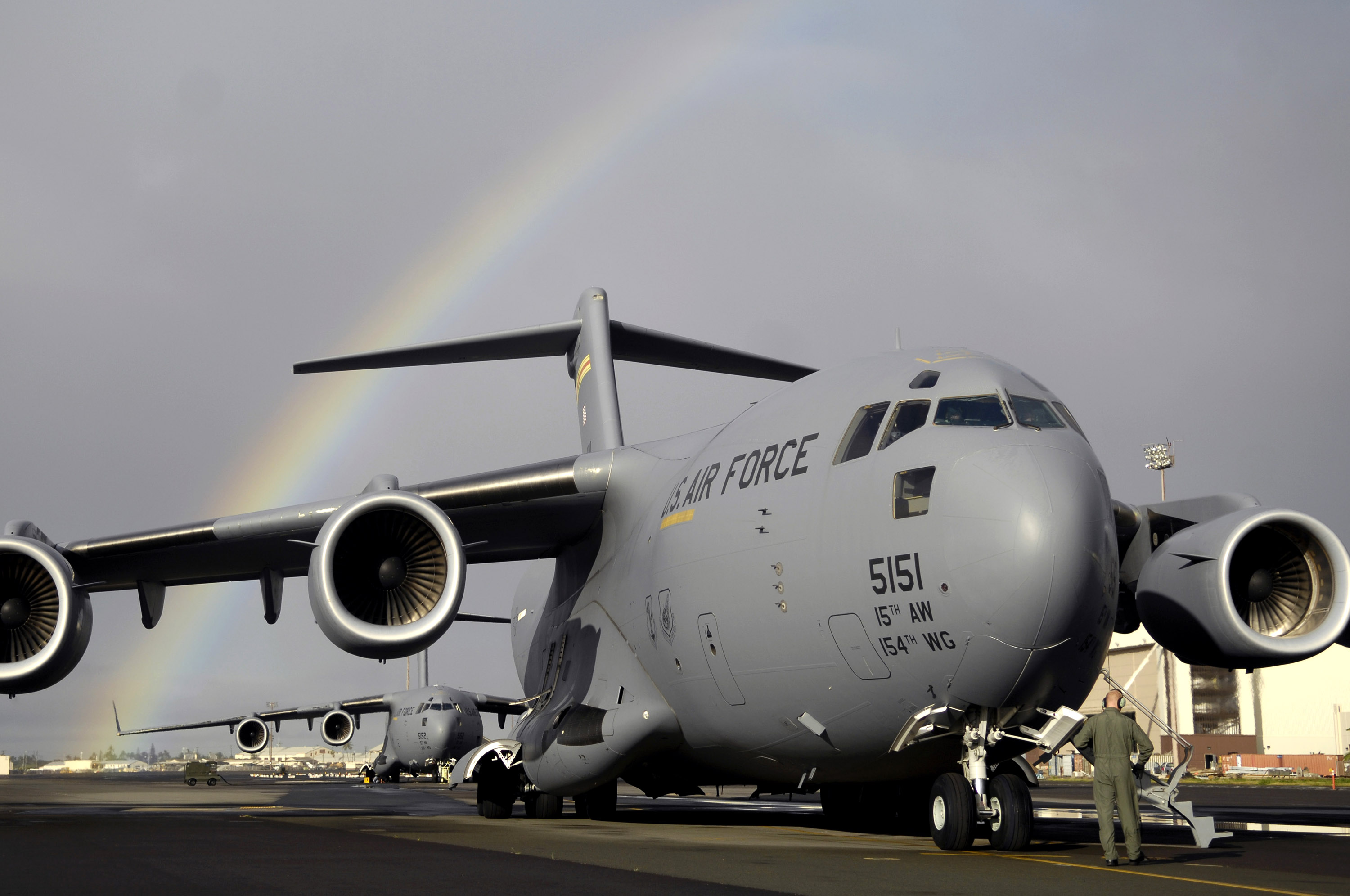
The Sorry State of US Military Airlift Capability


The USAF has a problem. It doesn't have enough planes for transport roles today and in the future. Worse its not doing much about it. This is a problem and it needs fixing.

 
(Photo source USAF)
 
This piece will hopefully be mercifully short. Because it is embarrassing. I want to bring this data to the front of mind because I believe we have an immediate requirement (more C-17s) and a long term replacement aircraft long haul tactical transport aircraft that can transport almost anything the US needs to deploy. (Let’s call it the C-X). 

The US has no airlift capability designed or contemplated past the current capability which consists of 3 forms. Infleet and outsourced. Here are the numbers:
Mobility Capability Fleet Size
Estimate
Unit of Measure
Strategic Airlift Aircraft
275
C-17/C-5
Commercial Airlift: Civil Reserve Air Fleet (CRAF)
257
Cargo/Passenger
Theater Airlift Aircraft 300 C-130
300
C-130

Here are the statistics for the US Air Force’s Heavy Lift capability. There are 4 types in fleet aircraft that are capable of hauling a tank. These are listed below. Note: a slight discrepancy between the numbers is due to the dates. The Fig 1 is likely to be the most accurate from Jan 2019 for estimates of the fleet in 2023. For information on the CRAF fleet go here: https://www.af.mil/About-Us/Fact-Sheets/Display/Article/104583/civil-reserve-air-fleet/ The large capability does not include any aircraft that can transport a tank. 

Type
maker
Class
Role
Introduced
In service
Lockheed
Jet
1970
52
Boeing/MD
Jet
1995
222
Lockheed
Turboprop
1956
176
Lockheed
Turboprop
1996
186
Boeing/MD
Jet
1981
59
Boeing
Jet
2019
11
Lockheed
Turboprop
1954
10

For the purpose of this article I will concentrate on the big airframes – the C-5M and the C-17A.
Due to the low amount of flying the USAF does of its aircraft the serviceability requires that the aircraft typically spends 3-4x each flying hour in the shop being fixed. At any one time the Air Force aims to have operational about 50% of this capacity. The USAF has a group who is focused on transport. USTRANSCOM. Here is its latest report: https://www.armed-services.senate.gov/imo/media/doc/Lyons_03-05-19.pdf In my humble opinion it’s not doing even that well. Published rates of aircraft that are currently available to fly have decreased every year since, well a long time. Using recent statistics the numbers have continued to fall. That number has falled by 8 percentage points. In fiscal 2012, 77.9% percent of all aircraft were deemed flyable. By fiscal 2017, that metric had dropped to 71.3 %, and it dipped further to 69.97 % in 2018. And the C5 has some of the worse numbers. Recently the availability for the F-35 (A/B/C models) dropped to around 35% for a variety of reasons but mostly missing parts. For more detail go here. It’s not like this isn’t a secret, but we have to start focusing the attention on this topic. If the current and future Administrations are going to be warmongering, as their previous generations were, then mission availability is critical. And currently it is pretty bad. https://www.airforcetimes.com/news/your-air-force/2019/07/26/aircraft-mission-capable-rates-hit-new-low-in-air-force-despite-efforts-to-improve/ It would be good to compare their rates to say… someone like the UK and Singapore. 

There are numerous stories that can be easily found of C5s that don’t complete their missions on the scheduled time. http://web.archive.org/web/20040112233408/http://www.afa.org/magazine/Jan2004/0104galaxy.asp  As the USAF does not publish any performance stats in the same way commercial aircraft operators do – we cannot see the actual performance numbers. The C5M is one of the most expensive aircraft to operate. The last data I can find is from 2016 where the cost was over $100K per hour of operation. https://www.businessinsider.com/air-force-plane-cost-per-flight-hour-chart-2016-3  So a typical mission from USA to Afghanistan and back would be about 20 hours each way. So $4 million a roundtrip. I am sure there is many an airline bean counter who would like to have that as his revenue number. If you want to be really geeky about Aircraft operating costs in the USAF, there are a few think tanks who dive into the Congressional data. Here is one from the Rand Corporation from 2015. https://www.rand.org/content/dam/rand/pubs/research_reports/RR1100/RR1178/RAND_RR1178.pdf A relatively short report but it will require you to dust off your regression analysis capability. 

As one C-5 pilot confided in me the plane was probably older than HIS/HER father. IE not inconceivable that the same airframe was flown by the current fleet pilots’ grandfathers. (There were no female C-5 pilots I could find in this research when the plane entered the fleet).
The latest talk is about extending the airframe out to 2060. Really??? The latest version of the C-5 (with remanufactured airframes) re-entered the fleet in 2018. The biggest change was that the engines were replaced with CF6s. Yup a 45 year old design. 

The C-5M is not the real workhorse of the fleet, that is the C-17A. A sprightly young thing who first flew in 1975 (as the YC-15). The bad news is that in October Boeing put the production line facility up for sale once the moratorium on the sale was lifted. The last C17 was delivered to the USAF in 2013. Production continued for another few years but now that’s all done. Using the same logic – the C-17 should therefore last into the next century. (Stick with me here, if the original life span can be extended from a 1970 in service aircraft for 90 years then a 1995 aircraft should last more than 100 years. Eisenhower must be spinning in his grave). But not to worry, the Air Force actually started to mothball some of the oldest ones in the fleet in 2012.  

There is no new design planned for large scale transportation for the US military. The US issued a study in early 2018 to look at the issue.  https://www.defensedaily.com/dod-starts-study-airlift-sealift-tanker-needs/air-force/  The resulting report is pretty thin. Here is the published version. http://www.airforcemag.com/DocumentFile/Documents/2019/MobilityCapabilitiesRequirementsStudy2018.pdf The actual numbers the Air Force is talking about is a further 3 C-17 squadrons and another 2 C-130 squadrons. But as we saw above there is no facility for producing any new C-17s. 

Perhaps there is something in Europe? Well the troubles for the A400M aircraft are well documented but at least there is a live production line. Current rate 9 aircraft in 2019. It could fly a lesser capacity payload compared to the C-17. https://www.militaryfactory.com/aircraft/compare-aircraft-results.asp?form=form&aircraft1=33&aircraft2=820&Submit=Compare+Aircraft

So there you have it. We have a problem and its urgent. We need to fix it. How?
Here is what I propose. For the short term, The USAF will have no choice but to add capacity and the A400M is it. The C-130x is not a possibility. So that is unless you want a Russian (IL-76, An-124), Chinese (Y-20) or possibly Brazilian (KC-390) aircraft. No way can the C-17 be delivered unless they are re-manufactured ones from the desert. 

For the C-X system, we should be looking at the requirement of a non-traditional heavy lift aircraft that can operate at a far lower cost per hour but last a really long time at relatively low rates of utilization. This has to be crewed but with a small crew capability with UAV support as back up. There are no current designs that should be considered.  The C-X should comprise a all new frame using a significant set of COTS components that can address the near term design issues.
Best of luck with this. I really hope someone wakes up and takes notice.

Cheers

23 July 2019

The 737 Max - woe woe thrice times woe but is it?

Boeing 737 MAX Simulator

Today's word is TRAINING.


I have opined elsewhere on my feelings about the Max and the reasons for its difficulties. So I wont be rehashing today (unless someone asks) as to why I feel the good people at Boeing messed up.

Instead I would like to focus on the topic of what the impact of when (not if) the 737 Max returns to the skies.

So here is the thing. if we calculate all the bad news from the Max grounding we could be talking about terrible things like the $30+ Billions knocked off Boeing's stock market value. Not to mention their $5 Billion hit they took in 2019 Q2's numbers. But let me posit that its one of the best things to happen to airlines recently. Why? Because when your load factors are at 80%+ your margins go through the roof. Couple this with the theoretical number of aircraft from Jet Airways, WOW etc and you can see that the slack has been taken up and the airlines across the pond are doing nicely thank you and domestically fabulously (except for WN who is probably taking it in the nuts). Oh but wait... who are the real losers here? Yup you and me. Travelling public who are paying over the odds. But just one tiny little thing. Boeing is still churning out Maxes at the rate of 42 a month. By my reckoning that will be about 300 ships by the time November rolls around. Dumping that number in the market in December will be very interesting. Come January the blood bath will be palpable. So spare a thought for the poor Chinese leasing companies. And if anyone things that there will be instant certification simultaneously- think again.

It is no mystery that when the Max returns it will face a series of challenges. I don't think that we should waste valuable reading time debating the nomenclature. It will always be the 737 Max no matter what the brand mavens at the airlines or Boeing apply to it. The bigger issues are how to instill in both the user community and the flying public confidence in the equipment and system.

The numbers are astonishing as to the mammoth task ahead of bringing the Max back into the regular world of airlines. The days of wonderfulness and joy will soon be tempered with the enormity of the task of retraining. And the cost.

Let's do some simple mathematics. A typical direct round number is that each 737 Max will require 5 crews. In December without taking anything else - that translates into the 380 aircraft ( originally grounded) and then the additional aircraft that will be produced through December which is currently grounded and future produced) That's another 340-350 ships.  Let's use a nice round number. 4,000 pilots who have to be retrained. A full retraining programme of 5 weeks to transition to a new type (which is a fair assumption to make). That is 400 Man years of training that will be required.  2018's Simulator census - found here https://www.flightglobal.com/asset/24074 - registration required but not a paywall. Lists just 14 worldwide. I will let you speculate as to whether that's enough or how long it would take to run those 4000 folks through a programme.

Hmmm bummer.

But let's go further... where are they? Today there is but ONE (let me say again that is a single) 737 Max simulator in all of North America. (Talk about hoist on your own petard Boeing). Its at Air Canada and there is a nice picture of it above. (this comes from a great article about it for Avgeek types seen here: https://pizzainmotion.boardingarea.com/2017/12/20/aviation-geek-dream-boeing-flight-simulator/ ).  By now its common knowledge that the airframer went all in on saying that additional resources for training would not be required. A few hours with an iPad should have done it. Couple that with the majority of Maxes will go as replacement aircraft not new ships flying new places. Voila the recipe that drove a distinct lack of interest in Simulators for the Max. By now there should be heaps of them all over the place. In particular at the other major North American airlines who are Max customers - Westjet, American, Southwest and United. And you can bet your bottom dollar that Air Canada is going to be whispering in the ear of the regulator in Canada https://www.tc.gc.ca/en/services/aviation.html about that need. And they will definitely be listening.

For the FAA - this is going to be tough going. The coziness between the Airframer and the regulator has been highlighted elsewhere. Re-certifying the simulators to be an accurate reflection of the aircraft's behaviour will not be easy. Something the NY Times figured out early. https://www.nytimes.com/2019/05/17/business/boeing-737-max-simulators.html

All this points to a difficult conclusion. Maxes will be released for flying but will only impact the market after a lot of re-training and those resources will be in extremely short supply for quite a while.

You have been warned.

UPDATE25 July 2019 : Today, WN removed Maxes from their flight schedule till Jan 5 2020. Given that the Xmas/End of year rush disruption would not be possible in any time frame - this is a wise move and has been greeted by collective sighs of relief across the Airverse. 

The chances of any airline introducing 737 Maxes before end of the year is now remote. Given that both United and American just announced cancellations through October and November respectively 2 weeks ago - this gives some credence to my core belief that the Max will not be back in revenue service until early 2020.

Yes I am back and posting again

"O Best Beloved"

It has to be one of the greatest exhortations from any author

Image result for oh best beloved

Growing up in England with a mother whose early years were spent in India, the "Just So stories" by Rudyard Kipling were among my favourites. My favourite of all is the Elephant's Child.  (You can actually read all of them from here: https://en.wikisource.org/wiki/Just_So_Stories). For one year I was largely kept away from school for a series of illnesses - then my only friends were books and VERY early Lego. Oh yes and that and the Light Programme https://en.wikipedia.org/wiki/BBC_Light_Programme . To this day I still like Radio. I bemoan its diminution in popularity  and particularly that of newspapers.

All of which brings me back as to why I am returning to blogging, and to Blogger itself, my original platform.

For the past few years, I have been relying on Twitter and it honed a skill in developing a way to attract interest on topic points I believe are important. But I have been remiss in not providing a way to deep dive into many of the topics. So, here I am back to where I started my outpourings.

I hope that you will read and engage with me on the continuation of my journey. I will try and write once a month - more frequently is my personal goal. I will continue to focus on my first love - which in case you didn't figure it out yet - is aviation. But not just aviation, it's many facets and a few other topics as well. I have a political point of view and do not feel restrained in expressing some of them when I feel its appropriate. My topics include:
  • Aviation in general
  • Civil Air Transport for passengers
  • Aviation History
  • Travel Distribution
  • IT for Distribution
  • New Technologies 
  • Startups
  • User Experience (UX interfaces in particular)
  • Manufactures- OEMs of all types
  • The customer experience - what it feels like good and bad
  • Loyalty and the way its implemented
  • Freedom of expression
  • Politics and Travel
  • Politics in North America and Europe
  • Topics of fancy.
A note on my point of view. I wear a number of hats and when writing or speaking for a particular entity I try to be respectful for that entity and for what it stands. Here, it's a different story. All the writing (unless attributed elsewhere) and comments here are my own. They represent nothing other than my personal musings and must be treated as such. They are driven from what is possibly a very unique set of experiences and perspectives. Be prepared for some of it to appear jaded, curmudgeonly even. I like humour and I have no problem in poking fun at various entities. My feeling is that if you are in the public eye - then you have consented to be "skewered" as opposed to flamed, unless you make a really egregious error. The same applies to any PR or product pieces. I am not a fan of being politically correct - so sometimes do expect me to err away from being warm, fluffy and fuzzy.

If I insult or offend within the context of this blog - then I offer an upfront apology - but not necessarily the need for a retraction. Also my grammatical and spelling errors will just have to be tolerated. Enter here at your own peril. That said, I hope you will be entertained, provoked into thinking and - even I aspire - to action.

Thank you

The Prof.

Feel free to email me - professorsabena@gmail.com or tweet at me ProfessorSabena (DM or public is fine). You can also find me on a couple of other Social Media channels.

29 December 2012

Moving To Tumblr ... and why (CORRECTED - Again)

This is (WAS - see below for the update) my last post on Google's Blogspot/Blogger tool.

Why would I do that. My blog has served its readers faithfully for many years. So why the change and why now after 2342 blog posts since 2006?

For the past 12 months there has been an increasing intrusion of companies who can hack into Google's security. Post things to my blog which are both irrelevant and not the message I want to convey.

I have tried very hard to keep commercial interests out of the blog and to provide only insight and opinion tied to fact as I see it.

Google's insistence that everything should link together is troublesome. I dont necessarily want to have to access everything via Google Circles. This process has become too tiresome to fight the constant battle of vigilance and Google's constant attempts to control the interaction.

So I am moving the Professor's Wisdom over to Tumblr. You can now find the new posts here: http://professorsabena.tumblr.com/

As the year comes to an end and we face the challenges and opportunities for 2013, I would just like to say THANK YOU.

Cheers
Yes i moved some to Tumblr but it suffers from the same problem. HOWEVER, I find these days that the best outlet is Linked in (at least for now) https://www.linkedin.com/in/timothyoneildunne/. So you can find me there in my native habitat. I also post on Instagram, Twitter (at least that what it used to be when it was useful) and Facebook. Look for my personal handle on #legroom and #legroomextreme

06 December 2012

Agents Groups - Short Sighted or Defenders of the Realm?


A good article in Travel Market Report by Michele McDonald posited that Canadian agencies as represented by ACTA fear Airlines will bypass agents.  She calls out a critical statement:
"Since the airlines are demanding the contact information before the consumer has chosen any carrier, the airline could bypass the agency entirely and contact the potential customer directly with its response.
ACTA Analysis of NDC"

At the heart of the debate here is whether or not the agencies have a role in the distribution of airlines product (assuming NDC happens) going forward.  Bear with me a moment - I think we have to consider whether NDC has a chance for success. At the moment judging by what is made public, I think it has flaws. Before someone takes my comments out of context I believe it will happen but only if certain obstacles are removed from the process.

The issues that can derail the process occur on all sides but here is a smattering:
  1. Airlines are constrained from what they can and cannot do as a group. 
  2. Airlines have not been terribly effective at getting things done fast. The announced processes look incredibly complex and tedious.
  3. The GDSs are not endorsing the process but are participating (cautiously)
  4. The commercial issues such as the contentious GDS incentive fee programs are not being addressed
  5. Now that the airlines Full Content Agreements (FCAs) have been challenged and the airlines have won at least one round (AA consent agreement with Sabre) we can expect FCAs to be limited.
  6. The spectre of price fixing comes with any effort on constrained distribution
Let's return to the matter of the role of the agent and the conflicts they face. I think we need to remember the key factors that brought us to this point in the first place.
  1. No one has an automatic right to sell another's product. Agents have few rights as resellers of airline products. (It is interesting to note that Travel Market Report describes itself as the voice of the travel seller).
  2. Easy comparison shopping is not a right and there is no law that states that comparison shopping via the GDS is a requirement. (Despite many attempts to do so).
  3. The marketplace for agency distribution is radically different from where it was 17 years ago. The cost of the GDS powered agency channel to the airlines is now one of the highest. 
  4. Viable alternatives now exist for direct and indirect distribution that is unique and customized to the channel and the distribution partners and less expensive. Yet the legacy GDSs have failed to provide adequate tools for the same of ancillary products through agency channels. 
  5. Airlines need to unbundle the standard product, rebundle and segment their product offerings into an increasingly sophisticated marketplace that responds and expects the product owners to do so.
  6. Understanding who the customer is and how they can be targeted by the seller is critical.
  7. Never forget that the airline has a mission to obfuscate the true price of the product. 
After all the rhetoric is expended there is a fundamental truth. The marketplace for airline products is now in the control of the product owner. All intermediary seller's of the travel product and the consumers have to accept this basic fact. The airlines have finally found a way to make money and the days of stupid airlines is rapidly drawing to a close. So agents - be realistic accept that the airlines have the ability to go around you. Get over this obsession. It will do you no good at all. Now you really have to compete in the open market. Use your best weapons. Your relationship with the customer and your superior knowledge.

For most travel agencies this situation has shone a spotlight on a true paradox. Are they the true champions of the consumer or are they the devil's hand maidens? Agencies have been placed here on the horns of this dilemma because they now have to find ways for compensation now that the commission system is no longer in place for air. Most agencies are now compensated largely by consumer. If you are a TMC - probably entirely through fees. if you are an OTA large amounts of your revenue come from the advertising. The smaller agents have an even harder time.  But what of the GDS incentive fee? Today for almost all agencies it is a matter of profit and loss. The billions of dollars in incentive payments that flow from the GDSs to the agencies annually is a life line. Accepting it - which encourages agencies to book only on those airlines for whom a fee is provided (in Canada the incentive doesn't apply in many cases to the sale of products by the largest airline Air Canada). That flies in the face of choosing the best option for the traveller. Indeed it could be argued it discriminates against low cost airlines.

How many agents have told little white lies that there is no lower fare, or that the fare was the best out there for that particular instance knowing full well that indeed there was another fare and another airline but that there was no compensation. Oh the perils of being an advice and transaction purveyor.

Sadly these issues are not debated in the open as airlines and travel agencies are gagged through non-disclosure agreements from speaking about the agreements and their contents. Over the years I have had sight of many of these agreements and can tell you that in my opinion they are onerous and highly restrictive.

Please chaps - can we be realistic about this issue and stop the nonsense about the airlines stealing agencies business. That ship sailed a LONG time ago. 

Cheers