Showing posts with label New United. Show all posts

22 December 2010

UA Apollo To Die in 2012/2013


A little break in the AA vs Travelport story was the news that United Airlines has served notice that it will be terminating its contract with Travelport for passenger reservations and airline IT.

According to Travelport they believe the business will go to HP's EDS Airline unit marking a big win for the California based Computer Services firm.

This marks the second time in 2 years that a major US carrier has cut its links to its former child. Last year AA announced it was severing its PSS agreement with Sabre and going to HP's new reservations system called Jetstream.

The announcement also hurts ITA's PSS prospects where it was also bidding for the business. However the only real contest was between the current big 3 PSS vendors. Sabre, Amadeus and HP.

Another icon bites the dust. For Travelport this will mark the 3 major airline loss.

TWA was folded and withdrew from Worldspan hosting
Northwest was subsumed into Delta - which has a facilities management agreement with Travelport
And now United is leaving.

Travelport needs to take its reservations services and give it a shot in the arm. From my personal experience, the hosting system of the old PARS was one of the more flexible and functionally rich hosting environments.

Cheers

27 June 2010

Can They Survive Without Merging?

Travel Weekly USA posited in Friday June 25th email that the fate of the merger hung on survivability. The recent hearings in Washington DC over the proposed merger are showing a harder time for the parties than the Delta/Northwest merger had under the Bush Administration. There are lots of reasons for this but there was a less than veiled threat put out by the airlines themselves which is – Let us merge or we fail and cause havoc. The dilemma was succinctly outlined in the Senate version of the hearings by its Chairman: "If this merger is approved, our passenger aviation system will have one less global network carrier, and I am not certain if this is good or bad, but it is increasingly clear that the current structure is not financially sustainable," Senate Commerce, Science and Transportation Committee Chairman Jay Rockefeller (D-W.V.) said at the start of his committee’s hearing earlier this month on the merger.

This is potentially true, but only part of the story.

As far as the overall ability of the two airlines to better compete – there is little duplication. For United Airlines the situation is more precarious than Continental. UA has mortgaged just about everything including some of its international routes. Its planes are old and even the announced order of 787 and A350s wont be on the flight line pool for many years. For what was for many years the largest US airline (indeed the largest by pax and flown miles worldwide for a while), the situation is not that great. For CO the situation is not precarious. It is healthy and so regarded on Wall Street. It has a relatively young fleet. It has good labour relations and a sensible route structure.

The labour relations have not started out well. The two Pilot Unions have failed to come to terms on “non-monetary” issues. Most likely seniority. The UA guys are so old that they would trump CO’s guys. The issue of seniority among pilots has been messy before. It still is over at US Airways with HP and US pilots still battling it out in court. I have flown more than a few DL flights this year where the crews have thanked me for “Flying Northwest”

But where I have the most trouble is in the competition area. The DoT seems hell bent on supporting the merger because they buy the argument of survival. The DoJ seems not to agree. The doctrine of bigger is better is not in the consumer’s best interests. As I have raised before the argument of “too big to fail” seems to be creating a monster no matter what the underlying arguments might be. Is that in the best interests of the US government which in essence would be agreeing to underwrite the ultimate commercial viability of the nation’s possibly soon to be largest airline. I think it comes down to the consumer’s best interests. In the more than 30 years of deregulation in the USA – the consumer on the whole has benefitted. It is not the government’s responsibility to police the stupidity of investors and managers. To return to a controlled oligopoly market either through mergers or regulation that must ensue, in my opinion, is not in the interests of the consumer. The basic economic argument points to a significant rising price to the consumer.

The better question is probably – do we need New United? If we take the worst case scenario that current UA fails, the impact across the board would be that the industry could accommodate such a failure. But both carriers are arguing they are vulnerable. CO’s Smisek and UA’s Tilton said, as standalone carriers they would not be able to weather the next big economic or industry "shock." The argument that one or both carriers could end up in Chapter 11 is being trumpeted. A new entrant however would possibly (I would say likely)emerge to challenge the status quo and offer low cost services domestically. The other carriers would be the stronger for it.

A challenging question. So what do you think?

Cheers

02 June 2010

The Real Reason for New United Merger- Too Big To Fail


Perry Flint who is the Editor for Air Transport World in his editorial this month used an expression I had seen before but have really rather ignored it until the stark reality of hit me. I admire Perry for his insight and I think he illustrated this with the following extract from the above mentioned editorial.

.... proposed merger between United Airlines and Continental Airlines, announced ... The latter (event) illustrates a natural, if perhaps unintentional, response .... Create an airline that is too big to fail, because the consequences of such a failure would be a massive and sustained dislocation of the transportation system that would rebound on the political leaders judged to be in charge at the time.

The amount of noise that is still being pushed in support of the merger such as this article in GLG News didn't leave me any option but to comment accordingly:

"I have to disagree with the analysis. My basic objections reach three points.

1. The economies of scale seem to be paramount to consumer freedom of choice

2. The discussion does not take into consideration that the airlines may act irrationally. As we have seen that the airlines do not optimize their operations even when they have the chance to. Thus to assume that they will act rationally and in the most economic efficient manner is not borne out by history or constraints within their own structures let alone within the market

3. This analysis does not take into consideration the disincentive of the remaining market for new entrant players.

I would also like to comment on one other subject.

It is not the US governments responsibility to help the US carriers compete on a global basis. That is highly inefficient economically. Rather the US government should be focused on the domestic market which benefits the majority of the US population (85:15) is the conventional model. To increase competition domestically it would be a good idea to both lift the investment cap - from 25% and 49% effective control - and allow non-US controlled airlines to operate "fairly" within the US market. Provided that reciprocity was fair and equal.

Thanks for reading"


However the objections now being raised in Congress show that there is a valid reason for fighting it now rather than waiting for the next downturn when the resulting carrier just might be "Too Big To Fail"

And what do you think?

Cheers

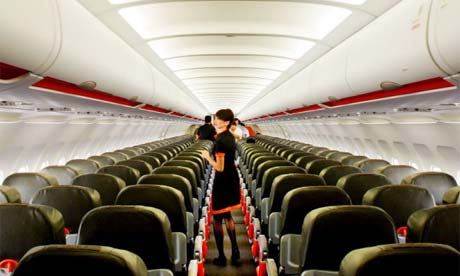
(With thanks to the Grauniad for the Jetstar Image)