29 August 2011

ATRA Ratings of "Safest Airlines" are Bunk


The Geneva based organization ATRA claims to use scientific data to rate airlines as being the safest this was provided to me by Professor Jackie who reads the Sydney Morning Herald.

The organization fully termed the Air Transport Rating Agency comes with the tag line "Swiss Quality Assessment". The data is taken from 2009 reports. When it comes to Swiss Airlines I am not sure that quality is that great.
Swiss Airlines are no strangers to accidents the last one being a Crossair Avro RJ100 in 2001 near Zurich.

Further Swiss ATC was to said to take the blame for a mid air collision between a Russian Airliner and a DHL Cargo plane. According to Wikipedia the outcome was as follows. On 19 May 2004, the German Federal Bureau of Aircraft Accidents Investigation (BFU) published its determination that the accident had been caused by shortcomings in the Swiss air traffic control system supervising the flights at the time of the accident and by ambiguities in the use of TCAS, the on-board aircraft collision avoidance system.

Er... Let's look at the list - all the Top 4 Airlines have had crashes in the past 4 years. Note that I am not judging the companies - just indicating whether or not the issue of a crash was to be considered or not. Here is the ATRA list for 2011 and for the top four players their most recent accidents:

Air France-KLM (AF447 A330-200 Mid Atlantic 2009)

AMR Corporation (American Airlines, American Eagle) (AA 331 B737-800 Jamaica 2009)

British Airways (BA38 LHR 2008)

Continental Airlines (CO1404 B737-500 DEN 2008, Calgon Air CO3407 Q400 BUF 2009)

NOTE I DID NOT GO BEYOND THE TOP 4.

Delta Airlines

Japan Airlines

Lufthansa

Southwest Airlines

United Airlines

US Airways

Interestingly none of the Skytrax top 10 airlines are in this list either. So in examining the criteria list they publish top 15 elements. Here we can see part of the problem. Frankly their criteria has some - but in my personal view largely irrelevant - elements that make up the criteria.

The 15 selected criteria are (as stated by ATRA):

Net financial result
Total number of passengers
Total number of employees
Total number of cabin crew employees
Total number of aircrafts
Average fleet age in service
Percentage of aircrafts on order
Fleet homogeneity
Number of aircrafts no longer in production
Number of aircrafts considered at risk
Total aircrafts-km flown
In house maintenance capability
Number of accidents during the last 10 years
Dedicated flight academy pilot-training facilities
Dedicated full flight simulators

(Note the typos are theirs not mine which are more than plenty!)

I therefore would suggest that you go to more relevant and far more respected sources for the information on who is the "safest" airlines.

With IATA now demanding that all members pass the safety audit for membership this should give some comfort.

Air travel is risky but no more so than crossing the street except that you are not in control.

Pronouncements such as this do NOTHING to advance airline safety.

The Professor has spoken.

Cheers and safe flying


27 August 2011

Google Chairman Delivers Public Caning To Britain


Outspoken (and now kicked upstairs)Google Chairman Eric Schmidt delivered a public tongue lashing to Britain's education system on its lack of focus on Computer Science.

While I usually dislike his points of view, I have to agree with him. Britain's focus on teaching in just about all sectors is a farce.

Successive governments have screwed the once proud system to the lowest common denominator. The standards of everyone was effectively lowered with the implementation of GCSEs and constant adjustments of the rules results in ineffective results with great soundbites. Read a rather disheartening set of stories in the Grauniad.

Sadly with education now saddled with incredible overheads and bureaucracy and corresponding cost - we are unlikely to see any meaningful changes from the public education system.

But take heart, Google is going to give you money to learn how to produce videos.

Just what the country (with the most CCTV coverage of any nation) needs.


Farewell Steve And A Deep Sense Of Thanks


Steve Jobs announced his exit from the management but not the soul of Apple. Notwithstanding the appalling pictures of him on TMZ (if they are to be believed) Steve’s impact on our lives has been deep and far reaching. I wont dwell on his many accomplishments but take from his work one thing.

Innovation is fundamental to our being.

Innovation and true advances are not achieved by consensus and SWOT analyses. They are driven by people who think and work hard. Who are contrarian. They are delivered by passionate people who believe even though perhaps every ounce of their being tells them it is – well wrong or worse even stupid. Something drives innovators. Steve was the epitome of someone who can make that happen. What Steve did was to be truly his own man. He made his own rules. He didn’t care about standards. He didn’t care about what people thought. He only cared about what his ego drove him to do. And this in our homogenized Googlesque world was iconic and – well different.

So from the bottom of my heart – I just want to say thanks for inspiring lots of people, me included.

I am not an Apple lover. I still use a WINTEL based PC. Sure I have an iPod and an iPad, I hate many of their commercial terms – don’t get me started again on the iPhone’s business model. But I respect and admire Apple enormously.

Steve – get better soon and again, thanks


Expedia Tries to Breathe New Life Into TAAP. Can this Drive Growth?


Expedia has undergone something of a transformation recently.

Earlier this year it reversed a long held tenant of using GDSs for its air supply chain access.

Now it is pushing partnerships of all sorts as a way to solidify growth in the face of a huge onslaught from its now #1 competitor Priceline a company that has trashed Expedia in almost every metric except overall volume.

Will Expedia's new approach win?

TAAP its Travel Agency Affiliate Program has been largely a tepid and tentative approach to a marketplace that doesnt trust the Bellevue based behemoth.

In its latest efforts it is offering it deep supply chain proposition to Chinese Travel agents. However here - it essentially only offering something that would not give a competitive advantage to an independent Chinese agent. With its investment in the #2 online Travel Agency eLong not making any dents in CTrips market lead - Expedia is still struggling here.

TAAP has not done a lot in the other markets where it has a footprint. In my view China will not fare any better.


Sabre's Mobile Study Sends Message To Mothership


Sabre has updated its mobile traveller study.

While the study sample size is in my view woefully small and the questions leave a lot to be desired (bundling of search and buy for example), it has some interesting messages for dear old mother Sabre GDS business and Sabresonic PSS business. I found the comments put forward by the head of the STINGroup Chris Kroeger interesting. A case perhaps of physician heal thyself. Here are the quotes that seem to me to make Sabre want to change some of the things that it does.

“Our survey shows that business travel today is personal. Travelers want the same functionality and convenience from their business travel tools that they have in their daily lives. People use travel services on their smart phones everyday and for every trip – before, during and after they travel,”

“The corporate travel industry needs to keep pace with the services and apps that travelers can access in their personal life and incorporate those into the world of managed business travel.”

“One of the biggest trends we see in the survey data is travelers’ desire for local business information and offerings based on their location via their smartphone or tablet,”

“Travelers will look for this information from suppliers, travel management companies and technology resources such as online booking tools like GetThere. Smart and savvy travel management companies will use technology as a way to fill this need and improve customer support and solidify customer loyalty. ”

“Today’s business travelers expect transactional capabilities from their mobile devices including buying air extras and in-flight amenities,”

“Tomorrow’s business travelers will move from physical passports, wallets and credit cards and will expect their mobile device to fill those needs as continued advancements in mobile payment, commerce and banking make it easier to electronically transact via mobile devices.”

Looking at this tells me that as a current Gatekeeper, The Dallas based company needs to look carefully at three major changes:

1. Providing content to its customers.
2. Mobilizing its applications
3. Removing onerous commercial terms to its users and suppliers alike.

So Sabre - consider this - the advice was free, the impact would be profound.

OK Break over back to the marketplace....

Cheers

26 August 2011

Really Proud Of Your Social Status?


I have been skeptical of the personal side of the social web.

Its a lot of fun. We get badges on FourSquare. We get to broadcast to the world how smart we really are....

Oh yea?

Oh YES BABY

I have been playing a game with myself this summer. Let me see how social I can be and the impact.

OK I can officially tell you it's a bust. I am a great believer in social commerce. And that does cross the line into my private life. My family hate it and all my relatives question my motivation. They tend to fall into three buckets:

Bucket one - Yes - way to go prof well done we want to be like you (this BTW is the minority)

Bucket two - Huh? what the FUBAR is he talking about...

Bucket three - this is so silly and dont include us in this (oh but do keep doing it so we can make fun of you privately.

Bucket three is by far the most numerous of my extended family.

Gowalla, Facebook and FourSquare have been the beneficiaries of my experiment. And no I have never made mayor. (I nearly got in in Neuchatel in Switzerland). And I am approaching Mayor status in America which I just found out is 0.7 miles from where I live.

http://pleaserobme.com/ and other sites are out there urging caution. And rightly so. Interestingly the maturity of the environment is mercifully saving us from people telling us about the social habits and their (er hmm) bathroom habits.

The automatic social web is perhaps the scariest. A change in status on Skype used to be only viewable by people I know on Skype. Not any more. It cascades out. The number of different places your status updates now appear are frightening. AND the speed with which it can happen is amazing. But then I get updates conflicting with updates that come via different interfaces. So actively maintaining my social web is well ridiculous and pointless.

So this marks the end of my social experiment.

I am now happy that I know enough to be dangerous.

Do you? Or are you still inviting that home invasion you always wanted. Insurance companies must love this.

Cheers

and a tip of the hat to Mobile Social Local blog for the image.

25 August 2011

Lufthansa Close to Offloading Majority Share in IT Subsidiary


Lufthansa Group IT daughter company - Lufthansa Systems (LSY) has been the subject of much speculation as to its future following the decision in in 2005 to move its reservations functions to Amadeus ALTEA or the STAR Alliance Common IT platform.

With the loss of its anchor customer (parent Lufthansa and satellite airlines) for reservations – LSY embarked on an independent effort to replace its aging Unisys based platform known as Multi-Host with a new generation product based on Unisys’s Air Core Environment platform. However this project was abandoned and LSY never proceeded with any customers for the Unisys based system. You cannot find any current reference to this system called FACE on the LSY site but there are still historical references: http://www.lhsystems.com/resource/document/pdf/news/keydata_2004.pdf Instead the Frankfurt based company has concentrated on its line of Airline Solutions, Industry Solutions and Infrastructure Services.

There was much speculation that Lufthansa would want to align its IT services business with that of its part owned Amadeus company in which LH still retails a sizable share. The Financial Times and other news outlets are reporting that LH Group will offload the majority share in LSY. However it appears that the leading two contenders according to these news reports are TCS (India’s Tata Consultancy Services ) and IBM’s T&T Group .
The likely scenario is that the winning bidder will retain the name LH Systems but own a majority stake 51% leaving Big Yellow with 49%.

UK Airline Traffic Faces Bleak Future


I watch traffic trends. Finding what trends are possible is like a treasure hunt.

One of the trends I have been watching is the decline in traffic in the UK. The recent recession pushed the largest adjustment in traffic (read fall) since 1950. But even absent this dramatic worldwide event - the market for travel in the UK has undergone a radical change in the past 15 years.

Just looking at the headline numbers you miss the fundamental shifts in traffic patterns. The massive growth and subsequent maturity of the LCC model produced a huge boom at Stansted and Luton (both one runway locations) and the regions. Only one major runway has been added to the main UK airports in the last 30 years. That was at Manchester. Efficiencies in air traffic and ground control have absorbed the increased travel. Remember when runway separation demanded 2 mins between each movement. The massive growth at Stansted made a huge difference to the UK. Thanks Ryanair and Easyjet.

But the future looks really bad. The current government reversed the previous Blair government in abandoning not 1 but three major airport projects which would have in effect increased capacity in the SouthEast of the UK by 30+%.

While the focus of the DFT's UK Aviation forecasts was to look at the effect of Carbon emissions - it had to have a baseline. That looks pretty bad. Consider their conclusions:


The updated forecasts also incorporate the latest economic growth forecasts, the latest oil price projections, reflect the entry of aviation into the EU Emissions Trading System (ETS) and the Government’s policy not to support new runways at Heathrow, Gatwick and Stansted.

The number of air passengers using UK airports is forecast to recover from the recent downturn, rising from 211mppa in 2010 to 335mppa in 2030 (within the range 300mppa to 380mppa), and to 470mppa in 2050 (within the range 380mppa to 515mppa).

The central forecasts indicate that, with no new runways, the three largest London airports will be at capacity by 2030, and that all further growth beyond 2040 will occur at regional airports.

The impact will be muted somewhat by the growth of rail connections to Europe. Remember that each Eurostar train is the equivalent to 2 747 full flights leaving.

One impact I dont think they have considered is the value of Cross Rail which in turn could add capacity to the market in the UK. By enabling additional traffic to little used airports which are viable. Such as Southend and Manston's massive runway complex. Further Cambridge Airport (1 hour from Kings Cross) could also be added to the pool. So there are several options that the Government refuses to acknowledge as viable choices.

Virgin Atlantic is right to sound the alarm. HM Government must address the lack of capacity and infrastructure in order to enable a vibrant UK economy.

I refer you to Aerotropolis as a good thought provoking book that can stimulate that a strong central government can do.

OK Chaps - time to wake up and smell the Coffee. And you don't have much time before it goes stale.

Cheers

22 August 2011

Outstanding Profits for Flight Centre


Confounding just about everyone - Flight Centre has been able to record worldwide profits at another record. While sounding a loud note of caution for the 2011/12 financial year with “crossed fingers and toes” the Brisbane Austalia based company has reported a record annual pre-tax. $213.1 million.(Aussie dollars are currently worth more than the greenback).

Read it and weep fellas

Cheers

Social Web Activity Changes, Declines


The ever evolving web has seen so many radical changes in our social structure that it is hard - especially for old Geezers like the Professor - to keep up.

I wonder openly if I am just special or just others. For some time I have felt like I cannot keep up. For the past 2 months I was not able to keep my email inbox below my optimum numbers.

It seems that we are all suffering from information overload. The result in my view is that there is far less activity in what can be loosely described in the pleasurable parts of the web. (And no that does not mean spending time on porn sites!).

I actually like sometimes to check out what people are doing in different sectors not just the Travel industry. To see how players are evolving their businesses. How the consumer reacts to the changes in a particular site. I love the Wayback machine it gives such perspective to what we are doing today. But sadly the amount of open time I have available to do this has fallen.

It would seem that I am not alone. According to the GlobalWebIndex “Wave 5 Trends” report, social network usage growth has all but stopped among 16- to 24-year-olds in the US, and in a few countries usage within this already-saturated group is actually declining.

I recommend checking out their global chart and the signing up for their reports.

I believe that the world is experiencing a maturation of sorts and that the "fun" part of social networking has been replaced with repetition and utility.

Sadly

Cheers


How Effective Are Coupon Ads Online?


OK so this may not be quite so relevant to Travel but its interesting all the same - but bear with me.

Couponing seems to be all the rage these days. As I have opined before I am not a fan of Groupon and Living Social. I do believe however that Couponing has its place.

So check out this article in eMarketer.

One of the most relevant portions of the article is the assessment of the effectiveness of Print at Home coupons.

For tactical purposes and merchandising the redemption and importance of these tools should not be sniffed at.

Cheers

So You Think The Consumer Is Stupid? Guess Again


I have this strong belief that Web Advertisers are just like traditional marketeers - you treat the customer like he is - well - an idiot at worst - at best not that smart.

However I don't share this view. In general I believe that consumers on the web are smart and getting smarter.

And we better pay attention to it. Because if we don't then they will switch off. Just like they have done in the past with other advertising channels that treated them the same way.

Well it seems that there is some evidence to support my supposition.

Check out this article from eMarketer (yes - I do like their stuff). This report is relevant from two perspectives. One that it demonstrates (at least to my tiny mind) that the consumer is getting smarter, but also that the consumer is well aware of what is going on.

Treat the consumer with care. At least with respect.

Cheers

Looks Like The Professor Called It Wrong. DL Goes For Boeing

Its not a done deal yet but it looks like Boeing is going to go mostly Boeing. With AA splitting its big order - Boeing will get Delta a mixture of 737-900s and 737 REs that now carry the designation that mirrors that of the 787s and 747s So it will get a bunch of 737-9s.

The exact composition should be announced as early as tomorrow

Cheers

The End of the PC Era - Worldwide Shipments to 2017


In-Stat has just published a study on Tablets.

You have to pay big bucks for the study itself but a few highlight items.

• Shipments will read 250 million units by 2017.
• In the consumer segment, tablets are competing against all CE and computing devices, not just PCs.
• Despite similarities in system hardware and software architecture, usage models among mobile devices vary by device type.
• The combination of mobile applications, new semiconductor technology, and the full Internet experience are key factors in empowering the tablet market. Big Data will lead to a massive move towards Cloud based environment to support a range of Apps. This in turn will lead to a raft of poorly designed applications and bootstrapped businesses sitting on top of the current infrastructure. Will Travel be ready for that?
• The 9-inch to 11-inch form factor is forecasted to be the dominant tablet form factor with 56% of the market in 2017.
• iOS and Android are forecast to maintain over 90% of the market share with Windows as a distant 3rd. Farewell WebOS and Symbian - where to RIM?
• Not supporting one of the leading OS platforms is likely to lead to the failure of several companies in the tablet market due to lack of application support. This is pointed at RIM more than anyone else.
• Wireless operator business models could have a tremendous impact on future tablet demand. Thus far the Wireless operators have managed to control the market and force some tough conditions on the user community such as the abandonment of the All you can consume data models in the USA.

Oh we better get to understand what this means.... THINK ABOUT THIS. And now act accordingly

Cheers

Sabre and AA - inch closer to a deal?


Both Sabre and AA sent separate notes to their stakeholders today extending the current agreement due to expire in 9 days for a further week.

Sounds like the lawyers are working over time.

At the same time AA is not letting the grass grow under its feet with the announcement of its second "relationship" (my quotes) for Direct Connect and the launch of a corporate portal.

Sounds like there is a lot of overtime being put in at both company locations and their partners.

Cheers

PS I tried to find an old AA Sabre Logo but could not locate one. So if anyone out there has one - please send it to me! Thanks

BA+QF surrender supremacy on Kangaroo Route


With no fanfare British Airways and Qantas have quietly acknowledged that the Kangaroo route belongs to someone else.

In the past 10 days they have both cut a direct flight each from London to Sydney. Last week QF announced that it would still have the same level of frequency because its partner BA would make up the difference. Today according to e-tid - BA itself has axed one of its two LHR-SYD directs.

Looking at the market shares on the route - we can see that there has been a significant trend away from the traditional carriers. SQ has also seen its share slipping on the route.

A rearranging of the world order on the Northern Europe to SE Asia and Oz has been going on for some time. The Gulf Carriers have been grabbing market share faster than anyone else.

At the height of the economic crisis - a RTW fare for about 500 quid existed. However this is not all the fault of the airlines. The fast rising Aussie dollar makes Australia less of an attractive proposition than other cheaper destinations. Couple this with the pretty dramatic fall in the UK economy and passenger traffic and you can see why BA and QF are making smart decisions to cut traffic on this route.

Still I am nostalgic for the time when this used to be the symbol of the Empire. My RTW this year just may be the last one on a OneWorld ticket.

Cheers

21 August 2011

Nike vs Shakespeare


There are many schools of thought on the web about the use of language. Some decry the shortening of the English Language (sorry for those of you who are not native English speakers - I am not good at the subtly of other languages). Yet others decry the over use of words in explaining things.(Prof: Yes I am MORE than guilty of this).

But a very interesting comment from Gerry McGovern this week on the absolute crap we get in our in boxes daily. Drivel driven announcements of less than useful value.

Last week I wrote about the Qantas marketing spin on their new direction. Gerry's column picks on more.

So here is a thought.

Decide if you are Shakespeare (in which case dont impose that on me) or if you are Nike (short sharps stuff I can use).

These days information overload demands Nike.

Cheers

Global Entry Program Gets Added Benefits

For those USA citizens who are enrolled in Global Entry System - it is being expanded.

Two new benefits are now being trialed.

The first is that Global Entry certified people (yes the Professor is one) can use the new expedited TSA security lanes being deployed at certain US airports.

The second is that The USA/Canada Nexus program is being integrated into the Global Entry program. Currently available at YUL, YYZ and YVR. This will speed things through those bottle necks

This should ease some travel hassle.

Here is the text of the Announcements:

We are pleased to announce that U.S. Customs and Border Protection (CBP) is partnering with the Transportation Security Administration (TSA) on a new Department of Homeland Security initiative announced July 14, 2011, that qualifies some passengers for expedited screening through U.S. airport security checkpoints.

This pilot program will be available to U.S. citizens who are members of CBP s Global Entry, NEXUS, and SENTRI Trusted Traveler programs. The pilot program will provide expedited screening through TSA checkpoints via dedicated screening lanes.

Additional information will be sent out prior to the pilot s implementation, explaining more about the program and the necessary steps you will need to take in order to participate.

For more information and the latest updates, please visit www.tsa.gov or contact TSA at (866)289-9673.

Additionally, CBP would like to announce the availability of Global Entry kiosks at select Canadian preclearance locations. Global Entry kiosks are now available at CBP preclearance at the Vancouver International Airport and at Ottawa s MacDonald-Cartier Airport. Global Entry kiosks will be placed at Montreal s Trudeau International Airport and at Toronto s Lester B. Pearson International Airport by September 2011. The placement of Global Entry kiosks at Canadian preclearance locations is the next step in the integration of the Global Entry and NEXUS Trusted Traveler programs.

The integration of the Global Entry and NEXUS programs began in December 2010, when CBP published a Federal Register Notice announcing that NEXUS members could participate in Global Entry. With the deployment of Global Entry kiosks to Canadian preclearance, Global Entry members will be able to take advantage of the program when returning home from Canada. NEXUS members will have the option of using either the Global Entry or NEXUS kiosks in preclearance. Further announcements will be made as necessary.


The Professor Weighs in On US Tax The Rich Concept


A small disclaimer - its Sunday and I often think about larger scale things on the weekend. Today my thoughts turn to the current conundrum of taxes. I was triggered by a Facebook "like" from an old friend of mine. So Professor CP - this is all your fault!

There are many problems with the US taxation system.

1. Its too complex
2. It is very costly to run
3. It is probably unfair
4. it doesn't collect enough

We face a future where our efficiency has in fact caused us to eliminate the very thing that we all depend on. Jobs! We have approx about 30 million unemployed, underemployed or otherwise able bodied but non-taxpayers in the USA.

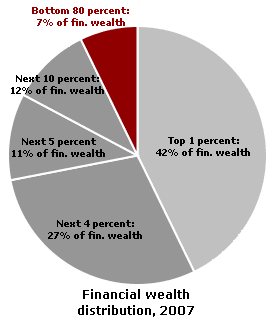
The USA is no different from many other countries where the concentration of wealth has occurred. USC's Bill Domhoff writes extensively about this.


In the USA unlike emerging markets - there is a majority of mature wealth owners who are no longer actively "earning" new money. So their old money is being used to preserve rather than necessarily grow.

So here is a radically different approach to taxation that I believe everyone can live with and support.

In my concept - it is easy to introduce and easy to calculate. It does not cost much to administer and It is fair. It will increase the coffers of the US Treasury.

My concept is as follows: A flat tax after the social charge of an individual has been paid. The problem of the usual tax rate is that the rich are taxed for being - well rich. My concept is to acknowledge that there is a charge based on the current tax laws to cover that equalization. However over a certain amount the rich have paid their contribution back to society. But we still need their tax revenues. Both on their cash flow inbound and on their assets. Thus I want to recommend a simplistic tax approach.

Tax everyone at one of the following rates:

10% for all income over $1 million after you reach $1,000,000 in gross taxable income

OR

1% of your total net worth is you have a net worth over $2 million.

Which ever is lower.

Then we can adjust based on the level of taxation necessary to support our respective live styles and social needs.

There are many things necessary to ensure equality of contribution to society. We can never solve all the world's ills. but I believe that society has to both incentivize the rich to spend their money and what money is not being actively spent should be "encouraged" to be used productively in the economy.

Consider if the money that went into the stimulus package had been used to spend rather than increase and build more secure capital structures. Interesting no?

Cheers

20 August 2011

The Impact of AA Out Of Expedia and Orbitz

The impact of American Airlines non-participation in Expedia and Orbitz during the period from the end of 2010 until restored by agreement (Expedia) and by a judge's order (Orbitz) was interesting in theory. But what about it in practice?


For the absence of ambiguity. The chart shows share sales and percentage increase/decrease in sales of airline tickets. This is transactions NOT sales dollars so they are a true like for like comparison. The source is ARC Corp. The full chart can be seen here. That bulging green line (downwards) represents a significant loss of airline ticket sales from Expedia and Orbitz. Far greater than I believe most people expected. With air revenue comprising such a small amount of Expedia's gross revenues - this did not adversely affect the Bellevue based company. For Orbitz however that does depend more on US Airline sales the impact as we have seen from the recent financial performance of OWW was significant to their bottom line.

This illustration is pretty dramatic and clear. In my view it shows two things.

1. That a single airline's withdrawal from key players in a specific market sector from one or more players who command 50% of that sector can be dramatic.
2. Even after restoration - the intermediary channels as a whole lose share.

There are other interesting things that can be read from this chart. Share does come back. Albeit slowly, but it does come back. it also shows that the OTA's expectation that the AA share would easily be absorbed by consumers switching to other airlines was false. The dramatic drop in tickets as illustrated by this chart is obviously not reflected in AA's total ticket sales loss.

There are many lessons in this chart. I leave you to draw your own conclusions. If you would like to discuss this directly with the Professor. Please see me after class.

Cheers

Tell It Like It Is - Skroo!


I admire Flight Centre. Arguably one of the most successful businesses in Travel Retail. I spend a fair amount of time working and analyzing the Australian market. The recent upheaval at Qantas and its refocused direction on both Jetstar and a diminished uber brand as well as expansion outside of its home market has drawn a lot of local criticsm. But FCL has been largely supportive.

It's outspoken CEO has a really great nickname. Graham Turner is known as Skroo. Pronounced the way it sounds.

While applauding QF's acknowledgement of its issues and being supportive - he could not help but give a little barb onto the way the information was delivered. Judging by the personalized communication message I received (which was really naff in my book) it seems that the airline's marketeers were scrambling to put a bit of spin on the subject matter.

Great quote from Travel Weekly Australia.
QANTAS MARKETEERS, no doubt, agonised,
sweated and debated long into the night - many
nights probably - over the ad campaign which
accompanied the carrier's announcements this
week.
Under the slogan "a new spirit" images of
children were used to portray the message that
Qantas may be taking a new path but you know
what: we'll always be Australian (said with chest
puffed out and that goo). We like straight talkers
here at Final Call and couldn't help but admire the
considered view of Flight Centre's Skroo Turner.
“I don't know who dreamed that up and I don't
know who it's aimed at. But it's meaningless
nonsense.”
Tell us what you really think Skroo.

Gotta love those Bruce's and Sheilas.

Cheers

Groupon - The New Gordon Gekko


I personally don't like Groupon as a business. I am only lukewarm to its personal value to myself and to my family and friends.

The model though really bugs me. It just feels - well plain wrong. Carving up someone else's business model and profiting from it.

I dont buy the whole - new business pitch. That is all BS.

Groupon has burned through and incredible amount of cash in a very short period of time. It has raised $1.1 billion and burned through $942 million.

Henry Bodget has a post on them pointing out that Groupon is running low on cash. This is VERY scary. The business is built on the standard model of growth at all costs. Therefore it should be a Wall Street Darling.

BUT note what it did with the cash. Here is what Henry had to say:
"it is also worth noting that, in the history of the company, Groupon has raised a total of $1.1 billion of cash--and paid out $942 million of that cash to its early investors and executives (highly unusual for such a young company). If Groupon does get into cash trouble, therefore, it will not be because the company didn't discover an amazing new business opportunity or raise all the capital it needed. It will be because of, well, greed."

Read more: http://www.businessinsider.com/groupon-low-on-cash-2011-8?op=1#ixzz1Va99ymW1

Greed is good. Screwing your customers is better.

I really have a problem with this.

Cheers

19 August 2011

One Head Now Hangs On Googlrola Belt - HP Dumps WebOS - The End of Palm


In the long term battle for dominance in the Mobile space - the number of players has been way too many.

Well scratch one from that list. WebOS or formerly PALM. HP who just last February announced a major push into mobile after it had acquired the assets of PALM - has now decided that it wont work. So its dumping the business. Ending a much sortied product line. Palm Pilot's became part of the vernacular of the 1990s. Now gone.

There is a possibility that someone might pick up WebOS and try to make a go of it - but in reality this is unlikely. The amount of investment required to revive the product and get any form of market footprint is just too daunting in both assets but more importantly time.

HP is following IBM in likely dumping also its PC business. It only goes to show that we are truly headed for a post PC world.

As I evaluate whether to acquire a MAC - I am struggling to justify my position. But after a year of a PC with solid state disks and a wimpy 250GB - I better have something a lot better this time around.

Cheers

18 August 2011

Recession Biting Europe. Air Berlin Axes Routes Loses CEO


Air Berlin is arguably the third largest LCC in Europe after Ryanair and Easyjet. However the company has never achieved the same results as the leading two.

AB is more than just an LCC. It really is a hybrid carrier having acquired in quick succession a number of different companies with different models, equipment and financial structures.

As it is about to join OneWorld it is moving into more legacy territory rather than the other way.

But reality bites.

Citing a number of issues including Air taxes in Germany and the UK - Airberlin is azing a number of marginal routes between Germany and the UK. Further it is cutting 8 planes from its fleet.

Finally its flamboyant architect of expansion Joachim Hunold has offered his resignation and it has been accepted.

17 August 2011

Note to Qantas - Obfuscation is a Big Word


This is a somewhat cheeky post. But sometimes you just gotta show up that some things are just silly.

Qantas who is having a little bit of a hard time of late. They are a fine airline but face a number of challenges.

I fly them frequently and like their service. Particularly the A380.

However to send me an email which by the time I reached the end meant exactly nothing is not a good position for the airline to adopt.

But take not my word for it.

Read the letter here that was sent out to QF Frequent Flyers.

It really contains nothing.

Please Qantas. Think before you open your PR mouthpiece.

Thank you for reading

Cheers


Follow Up Post - US Intermediay Sales Declines


I posted a story yesterday on the decline in July activity.

It bothered me. So I went back and tried to do a YTD creation comparing official US government statistics.

While these numbers are not completely aligned - the best comparison is to look at TICKETED transactions of ARC vs FLOWN passengers on DOT BTS site

Here are the 2 URL master sources:

DOT: http://www.bts.gov/xml/air_traffic/src/datadisp.xml
ARC: http://www.arccorp.com/news/stat/2011-05.jsp

The core data does not bode well for the GDSs and the US Agency business:

Through May - ARC transactions are DOWN 1.66%, DoT Traffic shows scheduled emplanements are UP 3.9%. This on only a 2.6% increase in capacity.

If I sound like a broken record - then so be it. Lesson here is that its a sellers market of airline products in the USA.

I had a peak at the Winter 2011 Schedule analysis. For the US airlines there has been a steady cut back of traffic. Delta is shaving frequencies across many markets. Dropping daily flights to 4-5 times a week is a common trick to reduce capacity.

This is going to put pressure on the intermediaries further.

The consumer has noticed.

Cheers


16 August 2011

US Market continues to decline

ARC's latest numbers are not looking good. The US market is once again down.

Total tickets issued have fallen for the first 7 months of the year. Down 2.05%. With domestic down more than international.

This continues to say that the flight from the agency to the direct side is a consistent trend but the number of flights available are down across the board.

In the fall schedules taking place at the end of the summer - we see a further set of cutbacks.

Delta will cut domestic and international flights. It is also intending to drop all turboprop operations. It is further going to end all codeshare on Turboprop aircraft domestically.

Consumers in the USA are now going to have to get used to a world where changes are going to be negative as well as positive.

Welcome to a new reality.

OTAs Headed For Stormy Weather


Nomura analysts have released a Tome on the OTA marketplace that is probably one of the most in depth studies done on the market in a while.

While I have not read the report - I have followed the news reports.

Specifically Nomura is cautioning on the value particularly of Priceline and Expedia which it has a bearish outlook.

According to Forbes the situation is not looking promising. With the marketplace maturing particularly in the USA. They cite the following specific concerns

They have three specific concerns:

Disintermediation: The Nomura analysts note that Google and Microsoft Bing continue to build out their online travel products. “This is a threat to the OTA’s traffic and value propositions and a benefit to large hotel brands’ efforts to drive more traffic to their sites,” they write.
U.S. Suppliers Strike Back: Larger hotel brands and airlines are working to decrease their use of the online travel agencies.
Asia-Pacific Expansion Costs: “We are wary of the near-term margin pressure for U.S. OTAs as they invest to grow in APAC,” they write. “In essence, we expect the region to be highly competitive and expensive to grow in.”

For the the big 3 (remember that Sabre's Travelocity is not included as its private)

Priceline: They think earnings beats will be increasingly difficult from here, “impacting the company’s lofty 18x forward earnings multiple.”
Expedia: “Given the U.S. pressures, uncertainty in Europe and the company’s required APAC investment spending, we struggle to find material incremental upside in the core Expedia business.”
Orbitz: “We are bearish about the company’s asset mix and forward prospects and believe there are better risk-reward opportunities in the Internet space.”

This position demonstrates that there is a general concern about the OTA model which challenges the somewhat high valuations.

This analysis will obviously trickle down into the mini-bubble of Travel services - particularly online. It also puts the Kayak IPO into a less favourable light. The ripple out effect that the Professor and others have commented on with regard to the whole intermediary space from GDSs to Travel Agents shows we are in for some storms ahead.

However in this I see a silver lining. The challenge of the big players represent an opportunity for niche players. Further the rather large cash piles at some of these players is likely to be freed up to invest in new start ups as these mature players struggle to maintain growth which of course is what powers their stock values.

The forces are aligning for change. Here is just more evidence of that

Cheers

Qantas Shows Effects Of Increased Competition


For some time Qantas has been suffering on its premium branded services. The flagship brand is still viable - especially when compared to other airlines who are in a lot worse shape than QF. However Alan Joyce is not waiting for markets to improve. He is moving decisively to address the carrier's ills.

QF suffers from high costs. Across the board it has one of the highest cost structures. Its home market where most of the costs are situated is now at record highs of the Aussie Dollar. Its fuel is more expensive in its home market. Its labour costs are very high. Of course it has a high percentage of GDS distribution costs.

Add to this situation increased competition. Specifically from the GCC based carriers who have been steadily gaining market share on the Kangaroo route. Domestic competition from a resurgent but still struggling Virgin also doesn't help. While Jetstar goes from strength to strength - the uber brand still languishes. And yes Tiger (partially owned by Singapore interests) will be competition.

So today Qantas announced something that would have been unthinkable even just a few years ago. It is cutting routes to London. While the choice still remains - BA will pick up some of the traffic - Qantas is going to cut back even further and refocus the business.

Gone will be a lot of the freebies. Gone will be some of the gas guzzling 747s that will get parked. The last few A380s will be deferred at the back end of the order. In the mean time a whole new round of Airbus narrow body aircraft will be purchased. A320NEOs. But wait - they are not in the QF fleet which has Boeing 737NGs.

Along with 1000 redundancies - this does not auger well for the QF Brand.

The group is fine. Jetstar announcements today are also looking good with the JV in Japan and the increased presence in Singapore. Interestingly, speaking about Singapore, you can almost see SQ getting a little nervous and then perhaps they too will be interested in competing more heavily with QF Group. But wait doesn't Singapore Inc have an interest in some of Jetstar?

Yes competition does get interesting

Cheers

15 August 2011

Beware Employees In Ad Campaigns

Cathay Pacific, probably one of the more conservative of airlines, has found itself rocked by a rather embarrassing scandal involving a male and female as seen in a flight cockpit in - well - a delicate pose.

Cathay has identified the people involved and both are "no longer" with Cathay.

This has somewhat upset the apple cart with the employee focused ad campaign. As CNN reports:

"The embarrassing episode has now affected Cathay's newest phase of its "People and Service" marketing campaign, which uses the catchphrase "the team who go the extra mile to make you feel special."

I bet there are now a number of airlines scanning the records of their employees who have appeared in ads or are about to - they really want to make sure that this sort of thing doesn't sully the good name of an airline.

Oh for the old days when Flight Attendants were dolled up to look like they were available and made to appear sexy for the then largely male audience. (Ed that was a joke).

Recently a Ryanair FA was exposed as moonlighting as a porn actress. Somewhat made MOL's promise of free oral sex on the proposed international version of the cut price airline more real!

It is actually an amusing and perhaps cautionary tale. I have written before however that there needs to be a strong sense of care when dealing with this sort of campaign. Delta for example talks about its people who make the difference. And they do. However for quite a few Delta purchased flights - you actually dont come near a Delta employee.

Be wise!

Cheers

14 August 2011

Healthy Meals - No Thanks - I will Have The Other One


I fly on a lot of planes.

I travel in front and the back of the bus

I have this inane sense that actually the airline does owe me a meal no matter what I paid for the ticket. But of course we don't always think logically. The Wall Street Journal's middle seat blog did an analysis of airline food. Its a good piece to read.

One of the advices given was to pack your own food. Great - but where can I do that when I am on the road for 6 weeks?

So what do I do to make it a bit better.

I usually find that there is a sushi restaurant in most airports that I fly out of. this is a healthy option. I try and get them to give me the light soya. I try and buy Turkey sandwiches if I can. Also I try and choose fruit when I am able.

BUT

Many times - its the shortest line and the easiest comfort food that wins. Perhaps the airlines and the airports should get together and figure out how to improve the health of the travellers.

Nah... that ain't NEVER going to happen.

Cheers


As an aside here - if you want to try and think about healthy food and the whole process of food and nutrition you might want to check out this blog:

http://nutressante.com/
- Click on the blog.

Sure its one of squillions - but it will cause you to think about the process of nutrition.

I really Wanted the Playbook But Bought an iPad

Sadly Blackberry screwed up royally.

The Blackberry playbook now has to be regarded as one of the worst product ideas ever.

I tried to use it in a few retail outlets and found the device either not working or the staff unable to demonstrate it. When I did find someone knowledgeable - the product was really inadequate. I waited to try the Crackberry tablet first before I really spent any time with the iPad.

Sorry but the Crackberry doesn't come close.

I am sort of OK with the iPad. I am still debating whether i will continue to carry it with me when I travel. I like a lot of things about it. But hate a lot of things as well. Its an annoyance that makes the device difficult to use and value.

I hate the compromises that Apple makes as they take their role of Gatekeeper far too seriously.

Oh well... I guess I might be happy by the time iPad 5 comes along.

Cheers

07 August 2011

You WILL Like New Twitter Promoted Tweets

YES my Liege... I will

Even if I dont want to I will have to put up with them.

Just another example of what was a free service coming with catches.

I wonder if there can be anything that could be done to prevent that?

05 August 2011

Is Airbnb suffering the legal challenges of a Zombie Mutant in both Travel and Apartment Rentals?


***Caveat*** I am not a lawyer and cannot provide formal legal interpretation of the law for the purpose of this article.***

Like many of us, I have been following the Airbnb story for some time. The recent high profile cases of renters abusing the apartments of those offering them via Airbnb have caused me to think long and hard about Airbnb’s model. The idea of a referral service is really quite attractive and a way to reduce the cost of hotel stays especially in expensive cities like New York and London.

From personal experience, I can comment directly. I have used Craigslist to find apartments in New York as well as many non-traditional hotel type accommodation services in London, and I used HomeAway to book my summer holiday in Greece last year. When I first heard about Airbnb, it sounded like an attractive proposition and even though I am a long time travel industry participant, I applauded its take on the market as an alternative accommodation provider.

However, I have been concerned that these companies should compete legally and fairly with others in the market. In the case of HomeAway, I was able to arrange a good contract and standard terms and know that the service was reliable, ALL as a direct result of the checking and care I was able to exert myself. In the case of the Craigslist in New York City – all I can say is that September during Fashion Week is not a good time to be renting a cheap hotel room, so I took what I could get and it turned out OK… just. And yes I did feel I was doing something that was breaking the odd regulation or two but economics trumped those qualms. In London I have dealt with brokers and direct property owners who are legally authorized to allow short-term rentals. This usually saves me a lot of money and I get a larger room.

I have tried to use Airbnb several times and found a wide mixture of agents as well as direct owners and individuals subletting among the offers; so far I have not been able to find a suitable rental that worked for me. The reasons are the usual level of not quite a good fit. However I was only prepared to bend the rules if the offer was economically compelling. I was surprised how many of the offers were not in my view that attractive in terms of cost saving. So I could get a better offer from a reputable brand rather than someone in whom I have no way to validate other than their “online reputation.” At best that is risky.

From a professional viewpoint, I would like to openly evaluate the legality of these types of services by reviewing the service premise and the possible issues arising from that premise. For the sake of brevity, I am going to distill this down to five factors:

1. What type of entities are Airbnb and their competitors? Is Airbnb a legally authorized body to perform the services it is offering, and does it need to register in every jurisdiction it serves?

2. Is Airbnb governed by any housing/accommodation service laws?

3. Is Airbnb providing or required to provide consumer protection, and if so what is appropriate?

4. Is Airbnb required to collect taxes?

5. Is Airbnb encouraging classes of people to break laws and/or their housing contracts?


1. What is Airbnb?

As far as I can tell Airbnb describes itself as a directory or listing service. As such it felt that it could provide a significant value with little downside to a business model that aggregates demand and supply in one place. Here is how Airbnb thinks of themselves. http://www.airbnb.com/home/about (scroll down through the section)

Travel in general remains one of the more regulated business sectors, particularly in air transportation as very strict rules apply to domestic and international travel. Accommodation services tend to be federally unregulated because there is so much local law that applies to hotels, apartments and other types of accommodations. However the commercial law around renting accommodation – short or long is very extensive.

In any travel transaction there can be a number of potential entities involved, including agent/broker, seller, product owner, etc. Travel is interesting as it is a market place – one might say several different marketplaces – dealing in electronic units of inventory. One of the characteristics of travel is that it is rare that people take inventory risk – travelers are confident the airline seat or hotel room will be available when they show up at the gate or at check-in due to regulations applying to the sale of such inventory. If it not there is time honoured solutions to the issue such as compensation.

I would question if a company such as Airbnb (and I name them only because they are the one we see most clearly) is actually a marketplace. Or is Airbnb a seller, or something else such as an agent or a broker? I am not legally qualified to add to the definition with absolute surety. However it seems that by collecting money, such an entity is not in the same league as Craigslist, nor would it resemble eBay. Companies can call themselves anything they want but just because one says something does not make it so.

Whatever one cares to call the party to a transaction, once you have a commercial relationship then corresponding commercial (and in some cases criminal) law applies. I believe this is at the heart of several of these so-called P2P business concepts. I may be a bit repetitive here but because you try to classify yourself one way – that is not relevant ; the laws have different ways of interpreting it. (No prizes for guessing which one is the one likely to win). If you make money then you are a commercial enterprise; as such you are the seller, the buyer, or a broker/agent. It would be hard to expect an entity such as Airbnb to avoid being classified as one of these.

In travel there are a number of laws that could apply. One is that you are a seller of travel according to this definition:

(a) "Seller of travel" means a person who sells, provides, furnishes, contracts for, arranges, or advertises that he or she can or may arrange, or has arranged, wholesale or retail, either of the following what?:

California law uses this definition (http://ag.ca.gov/travel/pdf/statutes_2007.pdf) but stops short because it defines travel as something that does not actually include the accommodation services. However there is a grey area because when they come to define “Travel Services” – then almost any service is covered by the law:


§ 17550.9. Travel services

"Travel services" includes, but is not limited to, lodging, surface transportation, transfers, tours, meals, guides, baggage transfer, sightseeing, recreational activities, vehicle rental, or other travel-related services, however denominated, including, but not limited to, travel certificates, registration fees, and processing fees. "Travel services" does not include travel services rendered by providers of lodging such as a hotel, motel, or similar lodging establishment where the provider of lodging supplies only that service.


However the State of California is so far not inclined to regard what Airbnb, HomeAway et al do as being part of the class of “Travel Services.”

There are several other states that have Seller in Travel laws, including Florida (http://www.800helpfla.com/pdfs/StatuteTravel.pdf) where one key section reads:

"Offer for sale" means direct or indirect representation, claim, or statement or making an offer or undertaking, by any means or method, to arrange for, provide, or acquire travel reservations or accommodations, tickets for domestic or foreign travel by air, rail, ship, or other medium of transportation, or hotel and motel accommodations or sightseeing tours by a seller of travel who maintains a business location in Florida or who offers to sell to persons in Florida.

Thus far the State of Florida has thus far elected not to challenge HomeAway and Airbnb. I believe that other states – such as Iowa will pursue the issue. Indeed the latter has now come out and said they will demand such adherence. This may make California and Florida re-evaluate their position. Other states such as Massachusetts will also be looking at this carefully.


2. Is Airbnb governed by Travel Legislation and/or Housing Laws?

If you provide an accommodation service then you are typically covered by many layers of laws. Basically the laws cover the areas of:

• Protection of Renters – mostly to prevent abuse by Landlords

• Protection of Landlords property

• Ensuring that properties are used for the correct purpose – i.e., for residency, not for money making enterprises

I would refer you to www.housing.org as a great resource for information. In my view Airbnb has specific issues as a provider of accommodation services even as a referral service. Probably the most complex market for this is New York City who has tuned its laws to ensure best fit in finding and collecting tax revenues. The reason is that NYC passed a law that governs the short-term rental market. In essence the law was specifically written to target HomeAway, Airbnb and Craigslist - http://open.nysenate.gov/legislation/bill/A10008-2009.

The battle raged long and hard. Supporters of the bill argued that there were issues of safety, citing fire codes and housing maintenance regulations and of course the collection of taxes. In essence the supporters wanted to bring these rentals into the same realm as hotels.

Opponents of the law argued it was an infringement of homeowners' rights and accused supporters of caving to pressure from the hotel industry who saw the lower rates on Craigslist and Airbnb as a threat. Even if that had been won – there would still be the issue of subletting. Read more: http://news.cnet.com/8301-13577_3-20009095-36.html#ixzz1TuobA7EF.

In many states and cities, there are standard rental/lease agreements to simplify the process of consumer protection in housing. These agreements have some pretty standard terminology that has been honed over many years. For example New York City enacts a standard form and most other commercial renters follow suit often more stringently - http://www.housingnyc.com/html/resources/faq/leases.html#purpose. This enables who class of landlords and the population of that city as a whole to have a common framework of legislation.

More traditional suppliers- would prefer to deal in service level agreements.
Expedia and others who have been long time sellers in Travel all have recognized processes and registrations. American Express as a financial seller has many extra issues it has to cover. So here are their disclaimers
https://www212.americanexpress.com/dsmlive/dsm/int/importanttravelnoticestermsandconditions.do?vgnextoid=01e35fc56445c210VgnVCM100000defaad94RCRD

In particular for the online agencies Expedia who does a good job in this area check out their terms and conditions:
http://www.expedia.com/daily/service/legal.asp in particular look at the New York City requirements: http://media.expedia.com/media/content/expus/graphics/other/travelscape_nys_certificate_of_authority.pdf this shows their right and ability to collect sales taxes under Local Law 43. A service such as Airbnb should likely register and have the same documentation available for consumers.

For renting apartments etc – there are a large amount of compliance issues that need to be covered. Check out City Rentals Terms and Conditions. http://www.cityrealty.com/how_cityrealty_works/terms_of_use.cr Compare this with how Airbnb covers the same territory. In my view therefore Airbnb falls under both travel (hotel type) and housing laws.


3. Does Airbnb have to provide consumer protection?

Comparing Airbnb to either Craigslist or to eBay is interesting because both go out of their way to address this issue.

When you have a full marketplace such as eBay care is needed to ensure that people transacting in your market are not hurting each other. EBay has a degree of caveat emptor as it has a clear set of rules of behavior and a guarantee - http://pages.ebay.in/aboutebay/eBay_Guarantee.html. Note eBay makes money from listings and from a cut of the financial transaction.

In a “free” space such as Craigslist, you can do certain things as the marketplace (as with eBay) or as a referral – it clearly understands it can be interpreted as either. Craigslist went through a degree of trauma because it found itself the unwitting participant in a battle between those who had to comply with a set of laws on accommodation services (ranging from hotels to apartment complexes) and those who did not for example private individuals. As a result, Craigslist has a great resource it developed with Project Sentinel Fair Housing - http://www.craigslist.org/about/state_fair_housing_laws. Remember that Craigslist does not collect money from private individuals only from brokers and agents, plus of course advertisers.

The issues of consumer protection are very long. They range from protecting against open scams to insurance for loss. Providing a guarantee creates a cost for the provider, and the provider must also prove compliance of that guarantee, creating another cost. EBay’s guarantee took a long time to settle in and even now the dispute resolution service is not easy.

The recent and very public cases of Airbnb arrangements going awry forced the company into a very public apology and climb down. Only after intense media and blogger attention did the company finally act. This is all voluntary because the company maintains it broke no laws despite a very public display of sackcloth and ashes by its CEO. However if the case can be made that the company has been offering accommodation services when they are in a regulated jurisdiction, then the company will have to address the consequences of that. So far no local jurisdiction has taken them through any legal process as far as we can tell. The attention I am sure will cause both conventional competitors and the regulators to sit up and take notice.


4. Is Airbnb required to collect taxes?

Airbnb collects money. As such it is running a commercial service. There has been a long running dispute between the Online Travel Agents - OTAs and the local hotel tax authorities over taxes paid and collected. After more than five years some jurisdictions have become smarter and closed previous loopholes governing what determines that tax. In New York City, the latest and most comprehensive change became known as Local Law 43. This applies to Airbnb in my opinion (and others) because of a decision the City recently made in how it classifies accommodation.

In July 2009, the city decided to change the definition of room “rent” to include “any service and/or booking fees that are a condition of occupancy.” The new law requires a “room remarketer” to collect and remit to the hotel the portion of tax based on the net or negotiated wholesale rent; the hotel operator will remit the tax to the city. In addition, the remarketer must collect taxes on the difference between the wholesale rent and the amount it charges for the room—the portion it calls its “fee”—and to remit that tax to the city taxing authorities directly.

That sounds like Airbnb would fall into the category of remarketer. Note that taxes collected are to be stated separately on the bill for the room. For hotel and motel owners the law is explained here: http://www.tax.ny.gov/pdf/publications/sales/pub848_308.pdf. However the interpretation of the law will continue to evolve because of ongoing disputes between users of the service and any entity that is classified as “arrangers” and “remarketers”.

Note that the State Supreme Court in New York upheld the law in 2010 - http://www.tnooz.com/tag/new-york-city-tax-law/.


5. Is Airbnb encouraging classes of people to break laws and or their housing contracts?

This is again a tricky area. Americans lawyers love class action suits, and there could be a basis for one here. The argument could be made that there are specific clauses in most renters’ contracts that prevent two activities:

A. Subletting, even for a short period of time

B. Conducting commercial operations from a place designated as a residency

Referring back to the City of New York standard renter’s agreement, the definition is clear - http://www.nyc.gov/html/nycha/downloads/pdf1/rc_lease.pdf:

The Leased Premises shall be the Tenant’s only residence and shall be used solely as a residence for the Tenant and the members of the Tenant’s household (i.e., those named in the signed application, born or adopted into the household, or authorized by the Landlord) who remain in continuous occupancy since the inception of the tenancy, since birth, or since authorization of the Landlord. The Tenant and the members of the Tenant’s household shall have the right to exclusive use and occupancy of the Leased Premises

One could make the case that Airbnb does not vet for nor does it seem to care that anyone with this clause in their rental agreement is breaking a contract. As such a class of property owners (as a class) who have rental accommodation could clearly argue that Airbnb is promoting renters (another class) to break their contracts on these two points. Such a situation is often grist for the mill of a happy set of lawyers.


Conclusion?

I believe that Airbnb and services like theirs have a responsibility to address these issues. Fundamentally they ensure the following four principles are in place:

1. Consumer and vendor protections are available
2. Marketplace protections make it fair
3. Taxes are collected
4. Laws and guidelines – where and when applicable – are clearly followed

Today I believe that Airbnb and its ilk are failing these standards on one or more of this number of points. I welcome any comment from anyone competitor, regulator or consumer. I would also encourage local authorities to examine the situation to ensure that compliance is indeed in place to protect the consumer.

There are many organizations who have fallen foul of these types of laws. P2P businesses are still just that. Businesses. Would it be fair (even if legal) to allow such a player advantage in a market place where others are complying with both letter and spirit of the legal jurisdictions?

As we all know – ignorance is no excuse under the law. Especially when you just had $112 million handed to you.


Cheers

Image from the movie Pandorium.

24 July 2011

"How I Screwed Up A Great Brand" Starring Netflix

Netflix has really pissed off the people in my neighbourhood. Almost universally - with a little prodding and evangelizing from some of them - almost all of the people have the standard account. Unlimited streaming and one DVD at a time.

Then they go ahead and split the service announcing that they will let you do the same but in 2 separate programs and it will cost you 60% more at least.

Here is the email they sent out:

Dear Professor Sabena,

We are separating unlimited DVDs by mail and unlimited streaming into two separate plans to better reflect the costs of each. Now our members have a choice: a streaming only plan, a DVD only plan, or both.

Your current $9.99 a month membership for unlimited streaming and unlimited DVDs will be split into 2 distinct plans:

Plan 1: Unlimited Streaming (no DVDs) for $7.99 a month
Plan 2: Unlimited DVDs, 1 out at-a-time (no streaming) for $7.99 a month

Your price for getting both of these plans will be $15.98 a month ($7.99 + $7.99). You don't need to do anything to continue your memberships for both unlimited streaming and unlimited DVDs.

These prices will start for charges on or after September 1, 2011.

You can easily change or cancel your unlimited streaming plan, unlimited DVD plan, or both, by going to the Plan Change page in Your Account.

We realize you have many choices for home entertainment, and we thank you for your business. As always, if you have questions, please feel free to call us at 1-888-357-1516.

–The Netflix Team


WTF???

Well let me show you what I think of Netflix now....

Oops this is a family website I can't do that. But let me show you what it did to Netflix's brand.

Image courtesy of BrandIndex.com

Will I be using Netflix quite as much as before... no.

Redbox is laughing all the way to the bank. Blockbuster deserves to be shot as they were really stupid in how they responded. Special pricing to bring me - a lesser service than Netflix at the same price.

Are these people drinking from the same water fountain. Back to school chaps.

Cheers

Are Tablets A Guy Thing?


I am a bit of a geek. It drives my family nuts when they see if I have the latest gadget. Latterly I have tried to moderate the number of devices I have. Consuming precious electricity and scarce resources - especially rare earths. But I still like them. The one I am having a lot of travel with is the iPad. Yes I have one. Its pretty cool. However I have tried to get used to it by playing games and reading books on it. Not that great an experience but these are early days. Finding the right apps that will be appropriate for me - is an interesting process. So far I use about 10 apps on a fairly regular basis. Some of the same that I use on a regular basis on my laptop.

In my view this is very much a 1.0 product. It has great potential but that doesn't make it ideal yet. Even as a "third" device that I believe it will become. (Laptop being one, mobile being two.

I struggle with the notion of having to be always on. Having used a 3G connection exclusively for the past 3 weeks - I cant wait to get back to full time broadband all I can eat - but that will have to wait for another 2 weeks.

A study by Gfk MRI makes for interesting reading. There is a definite gender bias towards the devices. Moreover the usage of these devices paints a picture I would not have expected. IE that the Tablet and eReader community are heavy written word consumers. While it is natural to assume that people read alot via these devices I am surprised at the amount of conventional book, magazine and newsprint they consume. Check out the press release on the study.

Forrester and Bizrate also have some interesting insights into the usage of these devices.

Here is where you should be able to see a presentation. It was down the last time I checked but hopefully it will be back up on Monday,

Cheers

21 July 2011

An Airline Seat - A Commodity No Longer


If you will indulge me - I am going to take a little time out to share with you one of my pet thoughts at the moment. As the Professor is formally on holiday - I have had an opportunity to think about the meaning of life. And I have been trying to get my head around the forces at work with regard to the battle for airline distribution.

An airline seat has been considered a commodity for a very long period of time. Brand differentiation has been considered as a loyalty issue. But today there is a very different perspective emerging. The airlines across the world led by the Low Cost Airlines have found that they can differentiate their product and that they can not only discriminate by price (the current exclusive currency) but by product feature.

As regular readers of the Professor's Wisdom know that I am not a fan of airline behaviour to their customers, as a frequent flyer - I am subjected to a litany of abuses at the hands of the airlines. Airline customer service is an oxymoron. But I need to use them and therefore have learned to accommodate some of their quirks.

However I am an ardent capitalist. I believe in freedom of markets along the lines of Milton Friedman. I believe that the owner of a product has the right to do what he wants with it. And if he is stupid with it - then so be it. As long as consumer rights are not trampled on - then the market should be free and open. (of course there has to be some societal constraints particularly for the environment and paying taxes).

Somehow in the past 10 years since 9/11 the airlines got smart. I think someone put something in the wine at Airline conferences to change the way airline execs approach the market. We have moved from the "capacity at all costs" approach to a more true market based supply and demand control model. The web of course has a lot to do with this. The creation of pricing transparency by the OTAs, Search players et al has changed consumer behaviour.

It is time to acknowledge that the world has moved on. There is no god given right to constrain a market and ALL contracts and practices that do so must be declared null and void. Preferred relationships can be allowed providing consumer rights are not trampled on. There still has to be balanced but innovation does not do well when trampled on by oligopolies or monopolies. (Think Google is a free and fair player - of course they are not). There are a large number of arrangements in various parts of the product lifecycle of an airline seat that constrain consumer choice and market freedoms. Airlines being allowed to create JVs – mergers in all but name being one. GDS contracts being another.

We need to acknowledge that the airline product is not a commodity but that it is also a utility. So it has certain responsibilities. Acknowledging the game of obfuscation by the airlines should not be something that is spoken of in hushed whispers!

What I think is going to be interesting is that there is a new issue on the table which needs to be addressed. This is the definition of who has the definitive "right price" for a particular seat on a specific flight. Under the present systems in place - the airlines have long delegated the pricing capability to the GDSs via ATPCo. That means that they are not in control of their own destiny. The obvious answer is to define a single (or controlled few) sources for approved pricing. Some airlines already do that. The LCCs for example have true dynamic pricing so you dont know what the pricing is until you have told the airline what you want. Bespoke pricing is not a new concept but it has always been hard to implement. The new technology developed for web engines however makes that quite normal and an easy low clost for the supply owner to manage. There are a lot of smart pricing engines out there in very complex products. Why not in airline seats?

So while the government's try to regulate ancillary services, in my view they are going about it in the wrong way. I think they should make the airlines publish a price list and then allow the airlines the freedom to define where the definitive pricing is stored and how to access it. It would make the process of regulation easier and by opening it up to all comers it would make the consumer be able to go to a definitive source(s) for information. The current system of different systems of proprietary logic and control is just outdated and needs to be blown away. A very good outcome is that the consumer would know where to go for a trusted and correct price – the definitive lowest fare. The current system creates confusion and also prevents Trust by the consumer.

Ultimately I believe that there should not be any mystery in it, we should think of other Utility markets and manage them appropriately and accordingly. Let all airlines compete freely. Let all consumers access the information fairly. Then let the intermediaries figure out how they can make money from offering services to the supply and the demand sides.

Yes - I am advocating a change in the system. I am so motivated by this that I am backing several ventures that advocate this position. In my view it is now time to just acknowledge that market freedoms are critical and that now is the time to do a good job in fixing the current screwed up marketplace that we have now. Today we have a closed system that has resulted in poor pricing transparency, an effective hidden tax to the consumer with innovation trampled on. All in the name of protecting the status quo. Well that needs to change. And clearly evolution is not appropriate. With both the EC in the form or regulation and the US in the form of the DoJ investigation are now looking at the situation.

So they should. But this time as consumers we should be getting a better deal. As capitalists we should let the most efficient way win.

13 July 2011

Agents Tell Cooks & TUI To Hold Nerve - Are They Mad?


Agents in the UK on the back of a profits warning from one of the big two UK Travel players - Thomas Cook are encouraging the company and its bigger rival TUI to hold the line on pricing and not to discount so reports TTG.

As usual in a situation like this - the knives and the pundits come out. Blame is being splashed around. But the fundamental reason for the problem is too much capacity and too high prices.

Well welcome to the world of the open market. Cooks and the market got it wrong. The expectation is that magically that by Cooks holding the line on pricing the market will respond positively and then the problems will go away. Well that is a load of horse manure.


The clear problem is that there is excess capacity in the UK market and that is not going to get better for a while. The decline in traffic across all sectors as well as a flight away from the traditional bucket and spade brigade - is hurting the traditional VTOs. This is not a new phenomenon. It has been ongoing for some time. The decline away from the traditional package holiday is begining to plateau but with so few people taking this type of holiday - its no longer as relevant. The peak was 18 million pax in the early 1990s - now that comparative number is down to about 3 million. While the unbundled model points to a larger use of the resources inside one of the big two - the total pax is now much smaller. In my view the big two didn't move fast enough to migrate to the more consumer appropriate model a la carte services. Low Cost Carriers managed to eat away at everyone's market share. The days of infinite growth are over. Ryanair has actually been judicious and has pulled back capacity form STN. For whatever reason - this has benefited their bottom line. The big two could have thought that this would mean they could recapture customers.

Nope

So now there should be significant discounting or the inventory will just go to waste. There is a big need to stimulate the UK market and the only logical way to do that is by price. That means in my view slashing prices.