29 April 2011

Mobile Trust and Privacy - Now A Major Motion Picture


Starring Steve Jobs and Larry Page as the evil villains. With Cameo roles by just about everybody.

This major disaster movie should rival epic disaster movies such as The Towering Inferno.


OK so enough of the fun - let's get down to the serious issues. As users and developers rush into mobile and the desktop starts to be less and less sexy to developers - the process of development has fallen into two camps. Lazy coders and evil coders.

One would be tempted to assume that no one does things for overtly evil reasons. But they do. In the case of mobile the number of pigs snouts in the trough is actually increased. Everyone wants to be like Apple - gouging themselves on as many possible revenue streams as possible. The poor longer tail players are left to pick over the consumer's carcass for some way to get some revenue. Trust the Cringe to give us a good perspective on this.

The convergence of these forces results in some pretty bad behaviour by the developers and anyone who wants to provide services. Fortunately on the web nothing gets hidden for long. God bless the transparency and those people who are just so darn curious for their 5 minutes of fame and at monitoring the big players.

So what of the general consumer. Fred Bloggs, Jean Marie, John Q Public etc etc. These guys our generalist consumer is very trusting. More so in the USA than in Europe. In other geographies - it is expected that monitoring is a standard form off behaviour for big government and big business. Good luck to them!

But this is not good enough. Despite the warnings from the Professor amongst a failure large chorus of players who have been trying to bring to the consumer these issues - we now have some major lapses and indeed solid evidence that there has been evil going on and these companies have been player fast and loose with our private information.

As I have opined many many times - there are two parts to messing with our privacy. First you have to actually monitor behaviour. Second you have to do something with that information. Most people have assumed that the monitoring is benign. Therefore the focus up till now has been on the misuse/abuse of the information collected. Indeed this is perhaps a defining characteristic that separates the European approach to the US approach towards privacy. The US approach says you can do about anything you like but dont mess with the stuff afterwards to take advantage. It also works on the 11th Commandment principal - "Thou Shalt Not Be Caught".

So lets's now look at some hard data. A good report by eTrust and Harris Interactive shows that actually contrary to the way the mobile players have been trying to hide this issue under the carpet the consumers have started to really appreciate the problems. And yes they are getting really concerned. From a study conducted in February 2011 - IE long before the relevations of the transgressions by Apple and Google in mobile - consumers had showed they were getting very nervous. about the top 3 issues of privacy, security and identity. You can download the whole report at the link above.

Infoworld went even further to address the issue form the developers point of view. Click on this story "Why Users Dont Trust Mobile Apps".

Just in case developers think they can get away with it - I would not advise you to make that assumption. From the Harris/eTrust survey:


So now we are all just a little bit aware. Despite the Black Turle'd One coming off his sick bed to try and quell the storm , the cat is out of the bag.

And this time Steve McQueen is not going to be rescuing the bad dudes. And as in all good disaster movies - The bad guys will perish.

Cheers

Oh Dear - Another A320 Nosewheel incident


So this is just two pictures - is this a trend?

Sabre's Kroeger Video: Airlines and Bloggers Say Travel Agents Are Not Innovative


I am not in favour of personal attacks on anyone. However, I feel somewhat obliged to defend the honour of the blogger community against perhaps some unfounded accusations.

I was sent me a link to a recent video message from Sabre's Chris Kroger to their travel agents. There is no disclaimer on here so I am assuming that the information is publicly available and freely distributed to the whole world through the wonders of the Internet.

In this message he is proclaiming Sabre's Innovation. More of the content of how he defines Sabre's prowess in innovation - later.

In the message he states:

"Recently there have been a few airlines and a few bloggers who have accused Sabre of being 30 year old technology and not innovating. And in some ways they are saying the same thing about you (the audience is Sabre Travel Agency Customers) a user of Sabre Solutions."

As a point of order if anyone is going to accuse Sabre of being old - let's go with a better start date of around 1960. (Source Wikipedia). When Sabre was started inside American Airlines and subsequently became part of AMR Corp. it was spun out as a separate company in 2000. If we are to accuse Sabre of being old - let's go with 50 year old technology.

His charge that some airlines and some bloggers have accused Sabre of being 30 year old technology does carry a lot of weight. There are many parts of the Sabre system that are indeed running robustly today and that are of that age. Robert Wiseman (Sabre Holdings CTO) since joining from rival Travelport in May of 2006 and his team have done a lot to modernize the Sabre infrastructure and keep it running. Robert is the man who overseas the "Hundreds of Millions of Dollars to ensure that our system architecture remains modern and robust... through modern protocol..." that Kroeger describes in his little talk. But we cannot deny that the platform is old technology and based on a 50 year old design. And that is not necessarily bad. It works. However is it appropriate for today's market? That depends on the position that you take with regard to what Sabre is today. In my view - it is old fashioned and it does need to be reformed to provide an open solution to the world.

I want to be clear that this is not to say that Sabre cannot do innovation - it clearly can. The question is more does it feel it needs to do significant amounts of innovation? EG Moving from a legacy architecture to one that meets the need of the customer of 2011 rather than the long extinct customer of 1960 is no trivial matter. Are they doing so? They claim to be - you are the judge.

Sabre is no longer willing nor able to provide a complete cradle to grave solution for every agency. Nor should it have to.

However has Sabre relied on innovation to maintain its dominant position in the marketplace or other means is a good question. In the view of US Airways - it is not Sabre's lack of innovation that has caused them to file suit against the Texas based company. It could be construed as a contributing factor however.

In his own words let's just let Kroeger tell us how he thinks that Sabre is an innovator.

"The Average Age of the hardware inside our environment is less than three years old". Yet he neglected to say how old the software was. It would be very interesting to hear that answer.

So here is my challenge to Chris Kroeger. Why not tell us what the age of the software modules are in the Sabre system. Come up with a verifiable metric so we can get an idea of how old the platform really is.

If Sabre's PEEPS provide this - I would be more than happy to publish this information. Perhaps then we can have an open and honest debate as to whether Sabre is truly modern and innovating in the same league as the other three companies he alluded to namely, Facebook, Google and Twitter.

Let me try to answer the question we started with. "Are Travel Agents innovative?" To me that is easy yes - they really are. This is the ONLY way to survive. Do they universally look to Sabre as the leading innovator in distribution? I think that would be an interesting question which in my view they do not necessarily feel so positive about.

Sabre Travel Information Network claims that it is "Powering Progress". In my view sadly its business practices are doing exactly the opposite. That has nothing to do with either their software or their hardware but more to do with their contracts and their lawyers.

And what do you think? agree with me or not? Let me know. In the mean time - let's see what can be done about powering real innovation in the market through providing next generation solutions for the consumer in an increasingly complex world.

Gotta love this business - the oldies love to dress themselves up on a cloak of innovation rhetoric.

Cheers


PS - If we are counting - I guess I am older than Sabre. And just remember what Sabre (an IBM expression from the 1950s) actually stood for.

26 April 2011

PSST - Wanna Know Why Expedia Settled With AA?

OK I did say that I thought this would come out in the end and that March would be the tell tale month for the online agencies.

Have a look the latest numbers from ARC.


The green line is the one....

The dragging down of the whole Intermediary market in the USA has been driven by the falling traffic from the OTAs. Now down more than 10% for 2 months in a row.

This shows you why Expedia realized that the removal of a key airline partner destroyed the consumer proposition of neutrality. I believe we will see these numbers moderate and the loss of share by the OTAs go a little higher next month but still negative in comparison to last year. Thus the kiss and make up session was bound to happen.

HOWEVER - there has been some permanent damage done. The overall share loss by the OTAs as a whole may be lost for ever to the direct channels.

I wonder how Orbitz are feeling right now.

Cheers

25 April 2011

Telling The Truth

In today's ever transparent world, lying is clearly not a good thing. You WILL be found out.

However advertising is full of spin and innuendo as well as half truths and those little white lies.

One of the key values that Social Media is demonstrating the relationship between content and brand. What we used to call editorial content in days of Yore.

Check out this video from Scribe Media.

This is very important. And the end line advice to brands?

“tell the truth… and lots of it.”

Cheers

Legal Opinion On Google ITA

When Google was trying to get approval for the ITA acquisition. I opined that there was little that the DoJ could invoke to prevent the merger.

Now with the dust having settled and Jeremy and the Gang have now been assimilated into the Googleplex we can see if I was right.

I scouted around looking for opinions on the approval.

Here is what I found that you might find interesting

I urge you to read this piece from the Washington Legal Foundation.

Enjoy it

Cheers

Is It All Really JUST About The Money? Airlines & GDSs To Duke It Out In Court


Sabre and Travelport - both private companies - have become the target of 2 lawsuits alleging Anti Trust behavior by AMR's American Airlines unit and US Airways. American Airlines is suing Travelport and its affiliate public company Orbitz (OWW). US Airways is suing Sabre. Both suits are similar in nature. At stake is the very nature of airline distribution in not just the USA but around the world. This analysis will hopefully provide the context of the battle. Sabre is controlled by 2 players - TPG and Silverlake Partners. Travelport is largely controlled by Blackstone.

It seems to have been a really busy time in airline distribution lately. We have had many things going on – so perhaps we should consider what is driving some of the changes going on. For many who are in the business – this battle has been a long time coming. However for the rest of the world and many others – this has caused a strong degree of head scratching. Consider this a primer on the core issue of control.

Let's just look at some of the major issues that have surfaces since October. This was the month when AA's battle with Orbitz burst into the open. Soon to be joined by Travelport, Expedia, and Sabre. Just looking at the last few weeks - I don't think we have seen such activity in a long time. Here is a list of some of the news stories over the past few weeks that have seemed to be disconnected. Here is a partial list:

• Expedia settled its battle with AA and committed to a Direct Connect – in doing so Expedia abandoned the GDS only model and agreed to go the direct connect route as well as signing its first LCC for Direct Connect – Air Asia in a far reaching Joint Venture.
• Delta Airlines signs with Farelogix to create alternative distribution services for the nation’s second largest carrier making a clean sweep of all the major North American carriers are now signed up to participate with the Farelogix platform. AC, UA, CO, AA, DL, US. Delta also makes the 13th Airline to have publicly committed to the system.
• The FAA Re-authorization bill passed without the GDS provisions that were defeated 3 times during the passage of the bill.
• The DoT issued new passenger regulations but in issuing this new "Passenger Bill of Rights" it declined to force (for the short term at least) provisions which would have made the airlines display ancillary services via the GDS.
• AA filed suit against Travelport and its affiliate company Orbitz Worldwide (owned 48% by Travelport) alleging anti trust behavior.
• US Airways filed suit against Sabre also alleging anti trust behavior.
• The DoJ after a lengthy evaluation approved the Google/ITA deal – the deal has now closed.


Are these unrelated? I don’t think so. But let me just focus on the 2 lawsuits.

For a minute let's just consider what is driving their thought processes. I am taking this from the perspective of the parties who filed the suits. We have not yet seen the defense other than both parties (Sabre and Travelport) has said they will vigorously defend their position. I have opined before that in my view Travelport’s statements lack some substance and so far have contained some factual inaccuracies but since they have not filed a formal brief – this can be construed as PR spin. . Don’t forget GDSs and Airlines can hire some pretty serious legal firepower. This battle is not new. Don’t think for a minute that the Airlines have not just woken up yesterday and said - "we're bored, let's go after the GDSs". This battle was clearly a very long time coming.

Both lawsuits (AA vs Travelport/OWW and US vs Sabre) are very explicit in what they want and the respective positions. While they appear to be similar - each airline comes from a very different space. The AA lawsuit is somewhat of a pre-position. The US suit is backward facing for the contract it already signed.

The AA lawsuit actually names Sabre several times in its suit against Travelport. AA has made its sentiments known that it feels the GDS model needs to change. Possibly after 9/11 and perhaps we can trace the lineage of the battle to the very moment that Sabre was spun out and AMR (AA's parent) put the resulting cash in its pocket. US Airways however is not quite in the same position. They are the smallest of the big airlines (Now comprising just 5 in the USA). They never owned a GDS. This makes them the least able to apply leverage in the ongoing battles. They also have effectively put themselves up for sale by delivering a message that consolidation is not yet over and that US Airways is ready to be merged into another airline - AA according to analysts - perhaps being the favorite. One could even opine that US is trying to ingratiate itself with AA. I make this point because I believe US Airways thus is not arguing from any position of strength. Ultimately in terms of scale we have to remember that the market share of each of the major American GDSs exceeds that of any airline in the USA market.

The driving forces for the lawsuits are that the airlines believe they asked nicely (well as nicely as an airline can) that the GDS behave differently. IE that the GDSs change their model. The GDSs refused both publicly and privately to budge. Indeed they went on to consider any change should be viewed as a nasty attack on their core business model, for which a vigorous defense needed to be mounted. Were the airlines napping on the job? Perhaps yes they were for a while. They thought they had a deal with the GDSs.

in 2006 the airlines and the GDSs entered into a form of social contract. The background at that time was that the GDSs were scared that the Airlines would provide content on their own websites that could not be seen on the GDSs. Thus moving both the trade as well as the consumer to more favourable content on the airlines own sites. The genesis of the Full Content Agreements was that the Airlines would give the GDSs full content in exchange for reduced fees. (I want to avoid using the term discounts which is how the GDSs saw this). This social contract worked pretty well because essentially all the major legacy carriers signed up for it.

In airline distribution - the traditional basis of the distribution landscape is one for all and all for one. Or as I prefer to characterize it as "one size fits everything." However the GDSs lawyers might have been smarter than the airlines' lawyers. Why? Because the GDSs managed to put in a number of provisions that created a far stricter contractual environment. So the issue of full content tied with a number of other provisions gave the GDSs a distinct edge. At the same time the GDSs started down a path of increased tighter contract provisions with their user community; the travel agents - the subscribers. In doing so they created a Gordian Knot. The airlines were trapped. The subscribers were trapped. The analogy - admittedly somewhat extreme - but humour me here I think you will find the comparison is not that odorous - it could be likened to a drug cartel (aka the GDSs) were able to control distribution.

But let’s not shed too many tears for the airlines. In the early part of the millennium the airlines ceased to provide compensation in the form of standardized sales commissions to the agencies. Thus the agency players and the airlines ceased to have a compensated relationship. They still however retained a contracted relationship either directly or via ARC. The corporate customers of the agencies allowed the water to flow downhill by paying the increased freight of an access fee for use of the agencies' services. Thus these agencies - TMCs - were able to transfer from a supplier paid fee model to a consumer paid fee model - a transition that went remarkably well. Even the leisure agents tried this for a while but this fell apart when Priceline refused to join the fee based model. In recent years the other OTAs - largest players such as Expedia and its fellows abandoned the fee model for leisure bookings. Sadly the independent small agents were not so lucky and this effort drove many of them out of business. From a peak in the mid 1990s to today the number of agency locations has collapsed from 55,000 to now below 20,00 outlets.

Thus there is dissonance in that the travel agents are in many cases not directly compensated for selling airlines product. This somewhat advantaged position works for the airlines because they regard their product as being valuable and that the consumer and their channels should pay to access the product. This conveniently forgets that the agents actually do add value in aggregating content for the creation of neutral offers to their consumers a core value proposition for the consumer.

The GDSs too started playing a number of games. Firstly they had created an artificial MSRP pricing structure and backed it up with the charade of saying they were providing large discounts to the airlines. How much of a charade? Even after allowing for the cut rate prices -Amadeus's margin in 2010 as provided by their annual reports show a margin of 48% on its GDS business alone. The other publicly available information for Travelport shows that its margins declined from a peak of 33% in mid 2009 to the current level of 28%. (Does Amadeus know something that Travelport doesn’t?) We can safely assume that Sabre is in the same ballpark. The average segment fee (net revenue) for each company was as follows:

Travelport – rose from $3.47 in Q1 2007 to $5.83 in Q4 2010.
For Amadeus we only have data from 2009 which shows the revenue per segment rose from (Q1 2009) $3.28 to just under $5. ($4.97 in Q4 2010) when converted from Euros to Dollars.

So despite the social contract between the GDSs and the airlines the actual cost to the airlines rose significantly during this time. NOTE I am using publicly available information and you can find this out for yourself on the websites of Travelport and Amadeus.

Indeed one could argue that the social contract was flawed to begin with but the GDSs (now fully controlled by the money guys in the form of Private Equity/Venture Capitalists) had obligations to increase their margins. How did they do that? They cut costs by slashing payrolls, cutting pure R&D and by changing their agreements.

In the case of Travelport there were significant synergies gained by the merging of the Worldspan and the Galileo businesses. However Travelport was upfront and said it would not bite the big one and merge its (now 3) GDSs into a single code base. In my analysis all the GDSs gained incremental net revenue through two techniques. Through unbundling their core segment fees, long before the airlines became effective at unbundling – the GDSs were doing this and made good money from it. But they also changed the contracts to further tie the airlines. At the other end they were able to generally reduce the cost of the subscriber delivery through cutting back on services. But the one area that they could not cut was in the segment incentive fees (aka as US Airways describes them “Kickbacks”). The competition for smaller pie – i.e. the reduced agent community – meant that the GDSs had to pay ever increasing incentives to the agencies to ensure a reliable user base. What happens is simply the GDSs take a portion of the fee that the airlines pay and kick back this portion to the travel agents.

To examine this - have a look at Travelport's 2007 and 2010 end of year financials.

2007

Cost of revenue.....................................$1,167
Selling, general and administrative......$1,286
Separation and restructuring charges.......$90

2010

Cost of revenue.....................................$1,164
Selling, general and administrative...........$547
Restructuring charges..............................$19

I think you get my point. During this time Travelport's segment count fell from 416.2 Million to 349.4 Million segments (all 2007 vs all 2010).

Rumours abound of the amounts paid not just to get agents to switch but also just to stay in place. These payments are so large in more than one market the asking price for a GDS segment incentive is $4.00. To cover this cost the GDSs must be indeed cross subsidizing the bigger agents (i.e. those with market power) from two places firstly the weaker and smaller agents who tend to be brick and mortar; secondly from those markets where they don’t have to provide incentives due to their market power – which today are very few.

In addition to the core issues above – the airlines feel that the GDSs have not kept up the investment in two key areas. Functionality to support the sale of ancillary and unbundled products (seats, bags credit card charges etc). The other charge is that the GDSs have actually inhibited the ability of the airlines to sell personalized services via the intermediary channels. For whatever reason - the GDSs do not provide these services today except in very few cases.

The core of the arguments that the airlines feel harmed is not just based on cost. But ultimately it is based on the argument of who controls distribution. So these lawsuits are about breaking the Gordian Knot.

Want to read some more?… actually you could have largely done a cut and paste of the law suits by going to a not quite so obscure website and downloading the Airlines comments on the US DoT NPRM concerning the Passengers Protection. Last week the US DoT turned this into law. Curiously only after two events. Event 1 - the Dept of Justice had approved the Google Acquisition of ITA Software. Event 2 – the FAA bill was approved by the US Congress. Coincidence?

The final rule making is here: DOT-OST-2010-0140

For AA’s comments on this rule making go here:
For US’s comments go here:

So now you know – where you sit in the debate should at the very least be powered by the information to hand.

I recommend that you go through the other submissions on the dockets. There is a lot of material in there. Then sit back and think – are these events connected? Yes. Is my answer. However the airlines feel emboldened by the changes coming. What we are seeing is nothing short of a fundamental shift in Airline distribution.

Catch the wave. Open Distribution is with us.

Cheers

24 April 2011

Do You REALLY Need To Change The Site?

In the web world - there is often an argument of change for change sake

Hey because the web changes so quickly you need your website to change too. The result is that you have big projects every year to change the site. People love to talk about "The New Website". Frequently that creates a groan from the user.

Just as he gets used to the new site and its changed navigation - along comes another one.

Making the argument for change is not hard. But do you ever ask yourself whether the change was really necessary. Would perhaps an incremental set of improvements have been better? Is this a wise use of the money?

Some sites cry out for re-design because they just get junked up or because they have new technology. Case in point the new Ryanair website.

A fun thing to do is to go to the WayBack machine. Have a look at some of the sites - like Expedia after a redesign. You will see how they tend to start clean after each redesign.

I heard a recent statistic that is really relevant to the Travel Sector. (This was quoted by Expedia in a recent webinar) the source was the IAB. The number of clicks before abandonment was 7 down from 13 a few years ago. This tells us that the customers are getting frustrated with sites. TOO much eye candy purporting to be "merchandising".

So now is the time to think - do I really need to change. If I am going to merchandise products and services or am I simply putting things in the path of the consumer that are unnecessary and will in turn piss them off.

I am still somewhat amazed that the Look to Book ration in Travel is so abysmal. It reeks of a lack of trust and clearly the site User Experience is driving a number of users away.

This week in my alter ego state I shall be moderating a panel on Airline Merchandising. I urge you to consider these issues. Finally here is a little piece this week from Gerry McGovern that takes these issues a little further.

Food for thought and ammunition to enable people to think more carefully.

Cheers

21 April 2011

Dr Who Community Mourns The Passing Of Elizabeth Sladen


I learned yesterday that Elizabeth Sladen had died. Here is a great tribute include the video of her exit from the show.

She was the archetypal Dr Who girl. The naive look of shock she managed to exhibit in episode after episode was always a source of amusement and perhaps a hankering for innocence.

Farewell Sarah.

And Delta Makes 6 - Impact on OTAs

I was playing with the stock of the big 3 public OTAs and the 4 largest airlines to compare their stock performance over the past 6 months.

In the wake of the decision by Delta Airlines to use the Farelogix distribution system, it is clear that the US market for distribution has now been clearly redefined. The big 5 US traditional model airlines - US Airways, American Airlines, Delta and Continental/United have now all signed up for the service. Technically Southwest may have too as they are consuming Air Tran who is also signed up with Farelogix. (So that is how I got to 6)

If the market as determined by the stock prices represents the wisdom of the crowd then I think we can clearly see that Orbitz is being spanked.


Click on the image to see a clearer image of the lines.

The Stock symbols are:

PCLN= Priceline
OWW = Orbitz
EXPE = Expedia
AMR = American Airlines
DAL = Delta Airlines
UAL = United Continental
LUV = Southwest Airlines

The recovery of Expedia since the change of direction is beginning to show.

I think we just witnessed a seismic shift in distribution balance.

Cheers

20 April 2011

The Like Button as a Proxy for Consumer Opinion

Many people are looking at Facebook as if it is the second (or 3rd) coming. But when you get to the real metrics you have to strip away some of the hype.

Let me give you an example of the hype that I believe is detrimental to the objective analysis of the value of Facebook vs Google.

Check out the Aussie website devoted to advertising trade. Ad News.

The discussion revolved around the head of the IGN - The News Corp site for Gamers. Chambers is head of IGN. He stated this...

Chambers said the average number of Facebook friends per user globally was about 130. The Dead Island trailer, he said, generated about 150,000 “Likes” .

“So 150,000 times 130 is a big number [19.5 million] and that was the potential traffic that was delivered back to wherever it was viewed - most of it came back to IGN,” Chambers said. “It then opens up the question: is a ‘like’ more important than the [search] ‘link’?”

Asked if it was, Chambers said: “Personally, I would rather discover something from a social circle of people who know me rather than an algorithm that doesn’t.”

Now it is the last statement that gives me most pause for thought.

This is where the opengraph and the use of the like button really breaks down. Drawing the analogy that the Like Button = proxy for my social friends recommendations is FAR TOO SIMPLISTIC.

This bothers me greatly.

The like Button which we all know is often clicked in a Pavlovian response of an expectation of a Gimme type gift therefore is also being gamed.

So you have to decide how much do you think this is going to be relevant. Don't dismiss it but give its context.

Cheers

19 April 2011

Low Fare Airlines to Dominate But....

An interesting report from the ELFAA and York Aviation titled European Low Fares Airline Association: Forecasting the Market Share of Low Fares Airlines in Europe.

its only 15 pages and well worth the read. But I will challenge the presumed results.

What the report fails to acknowledge is the maturity of the Southwest Model. Also it fails to consider that there will be a capacity constraint problem in Europe. It also doesn't give any allowance for the opening of the European market to non-EU based carriers.

With Stansted Airport - Europe's largest Low Fare airport experiencing traffic declines - these numbers may be hard to sustain. But in my view this discounts entirely the hyrbidization of the airlines - particularly Easyjet and Norwegian. I predict that by 2020 Easyjet will be a legacy looking carrier with full service amenities just like jetBlue and to some extent Southwest have become in the USA. Norwegian will have also LONG HAUL flights as it has purchased at least 2 787s.

Further I believe that Ryanair cannot continue to expand using secondary airports and therefore must adopt some full service ancillary service capability. Indeed just like Southwest has experienced in the USA market.

I believe that we will have had a total breakdown of the legacy GDS model and a replacement of so many options of distribution that there will be a whole new class of Air Find services. More implicit than explicit type interfaces.

Finally I predict that the long shadow of Emirates and to a lesser extent the other Gulf carriers and the removal of competitive barriers will mean a great deal of additional competition of different characteristics. We can look to the EK Trans Tasman flight extensions as a model for increased competition inside Europe. Of course this assumes that the legacy EU carriers are not successful in bringing barriers to entry through regulation.

Food for thought.

Cheers

18 April 2011

While Banners Show Surprising Strength CPM continues its decline


The numbers are in for 2010. Here is the analysis from eMarketer.

Online banner ads did surprisingly well. But looking below the numbers and you get a picture of the ultimate change in the profile of advertising.

CPM based or impressions based metric'd media is clearly on the way out replaced by performance based models for online.


With the likely investigation and restriction (in the USA) of targeting - this is likely to be the definitive model for some time to come.

Cheers

Boeing's X737 Dilemma. Increment Or Radical?


If you go on eBay and type "Sonic Cruiser" you will find a number of models of the ill fated Boeing Sonic Cruiser. Probably one of the sexiest planes designed. A modern day XB70 which in my view was the most beautiful aircraft ever flown.

Boeing faces a significant dilemma on what it does next. Does it go a Sonic Cruiser approach or a conventional approach? As it tries to figure out what is most important and the relative priorities of the X737 replacement for the world's best selling jet transport.

Fuel economy, Noise, passenger comfort, safety, cost to build, cost to operate, the environment, competitive... the list is extensive.

But the most important factor of all is the one that bedevils Boeing's decision processes. That factor?

Time.

The excitement around Boeing announcing the X737 at the 2011 Paris Air Show is beginning to dim as more more "leaks" from Chicago and Renton come into the general consciousness.

Boeing looks like it will make the decision to go with a new aircraft. I think that is now fairly obvious especially with the probability of a production commitment date of 2014-1015. But its ability to deliver a new aircraft before 2020 in volume product seems remote. That is going to give A320NEO a 4 year lead. With the first year's NEO production rapidly filling up with commitments Boeing is caught in the time box.

So this is the Professor's prognostication.

1. Boeing will announce some enhancements to the current production models. this will result in about a 1% increase in overall efficiency. Look also for the almost "full" 787 cockpit to be placed onto the current product. I suspect that there will be some pricing adjustments to take advantage of the short term price advantage that the aircraft may have.

2. Repositioning and aggressive marketing of the current -900ER as a 757ER replacement for thin transoceanic routes. Many of the current 757 ERs are reaching end of life and few were original build ER aircraft. Look for some cabin amenities to be improved - particularly in the seating configurations. A stretch is unlikely and unnecessary at this point.

3. As the short body 787 is not making much headway - there is a possibility that a revised 767 maybe introduced now that Boeing has the 767 with a 787 cockpit (courtesy of the Tanker program - which Boeing needs to make money on) and a short body and will continue to be produced in Everett.

4. Boeing will announce a commitment to the new plane with a 2012 in service delivery date.

Let's see what happens. At this point a GTF product on the current 737NG is a non-starter.

Cheers

17 April 2011

Inspiration on Human Speech From Roger Ebert @TED.com


I think you all know that I love TED.com and its speech.

I have been fascinated by the abilities of people to overcome limitations of our bodies. Those who cant see. Those who are missing limbs. Those who cannot hear. Those who cannot speak.

Roger Ebert a well known US Film commentators for many many years. Due to a lost battle with a form of cancer - he can no longer speak.

Watch this and be thankful for the abilities we have and take for granted. Then marvel at the way this articulate and brave man has used Technology to overcome his obstacles and resume life as a contributing member of society.

Check this out and once you do - go to the rest of TED.com for more inspiration.

Thanks for reading

So What Is Your Expert Opinion?

Many consultants are called on to provide expert testimony and subject matter expertise. I have been called on frequently to do this as an "expert".

I am a member of at least one Expert Network. And I am happy to do that work.

The issues of using a machine to provide the same level of service comes into question. Could Watson do this?

There is a great article here.

Have a read - highly recommended for you no matter who or where you are in the Knowledge Food Chain

Cheers

Web Navigation - THINK First


Most web navigation is a set of compromises of many different flavours. The days of simple Nav have long since gone. Our products and services - especially in Travel - are very complex. Compound this with the fact that most Travel products are dynamic in nature.

As a result we have crapola Nav on so many websites.

However that is no excuse for not trying to do a better job of getting it right.

Gerry McGovern's post
this week tackles the poor state of web navigation and gives some perspective.

In my view two sites that do a reasonable job are BBC and Amazon. However despite the attempts - I still find both maddeningly complex and really lacking in context.

In many cases because I don't trust the Nav to do a good job I frequently re-trace my steps and go down paths from the top of the tree rather than expecting to use the links to cross to other pages deep along the branches. So in my view if you are not able to do a good job - then have structured and consistent Nav. having explained this a squillion times to web designers here are my rules for Navigation.

Fixed Nav MUST NOT CHANGE and sits on the Nav bar - or LHS/RHS Nav metaphor you are using. Ditto the stuff on the bottom and on the Site Map.

For Dynamic Nav - do this via links on the respective pages.

Cheers

...But US Online Up in 2010. Now What?


The latest missive from PhocusWright's view of the Online market for Travel shows continuing growth but clear maturity.

The number of US consumers researching and booking travel online is still growing. More than 114 million people will research travel online this year, and 93.9 million will book it.

As the market matures - there is one looming issue. Is the US web user bored and tired with the current explicit nature of search for Travel?

In my view the answer is yes. This should give a lot of encouragement to the likes of Hipmunk and all the others beavering away in Garages and Backrooms trying to improve the search experience.

And along comes the Google Borg. They will change search for Travel.

Cheers

Mobile Travel: Research yes, book - not necessarily

The trends towards usage of a Smart Mobile device (as opposed to a pure phone and as also opposed to a dumb mobile device) is increasing. However be careful with the hype.


The issue is that the metric is a very broad one. Accessed a mobile search once a year.

However I do believe that the adoption curve will be fast and furious as people get used to using Smart Mobile devices.

If you want to have a little quiet giggle to your self. Next time you fly on a plane with a seat back video system. Watch how people interact with it. Those who have smart mobile devices will use gestures and will swipe a button on the touch screen. Those who dont will be trying to disturb the people in front of them

Cheers

UK Travel Online Not Quite So Healthy


While the whole UK market for products sold via the web had a healthy boost in March and continued its move upwards, Travel took a stumble last month in the market.

As reported in etid, The latest figures released by the IMRG Capgemini e-Retail Sales Index have registered falling online travel sales for the first time in a year

In the UK, during March a year-on-year increase of 14%, also meant overall the first quarter grew by 18%, the largest first quarter growth since 2008.

However, the trend was not mirrored by the travel industry which saw a year-on-year fall of 2% in online sales as well as a 15% drop on February’s sales.

This is likely driven by the late Easter and the general UK economic conditions which have continued to show travel sales falling in what was once Europe's largest market for Travel.

As Chris Nixon, managing director at Kelkoo Travel, said 'With online travel bookings across Europe set to account for 35% of the total travel market in 2011 and predicted to be worth £73.7bn, the internet is an essential way of searching for the best prices across both low cost and traditional airlines.’

UK is going to continue to struggle for some time. And yes there will be more casualties with the market resembling a lot of walking wounded.

Cheers

15 April 2011

Travelport Makes Claims That Sound Too Good To Be True

Sometimes - you see information and then you say to yourself... this can't be right. Such is the case with the Travelport numbers in their latest press release that went out this morning. So with my painstaking efforts and several hours of detective work - here is what I believe is the CORRECT information.

IF I AM WRONG - then can Travelport please correct my numbers or my calculations.

So I read with interest the Press Release from Travelport. You can read the whole release here, I draw your attention to the following section:

“Notes to Editors:
• According to Travelport estimates, only 13% of all airline passengers boarding flights in the United States purchased their tickets through Travelport's GDS travel agent subscribers. These subscribers earned an average distribution fee of (1.2%) less than 2% of the average ticket price. In comparison, the average distribution expense for a US hotel is 1.5 % of the cost of a stay.
• Over the last five years, Travelport estimates that the distribution prices paid by US airlines to Travelport have declined by 18%. On a real or inflation adjusted basis, distribution prices charged to US airlines have declined by 24% over the last five years.”

So I will challenge these statements using Travelport's own numbers:

1. The subscriber fee statement information is in my opinion misleading.

According to the US Dept. of Transportation the average domestic ticket paid in Q3 2010 (latest data from Feb 2011), the price is $340.
Using the average ticket price, the average number of segments (Per ARC Corp is 2.2 segments per ticket) at the average segment fee paid to Travelport (from Q4 2010 Travelport) of $5.71 net revenue – then the average ticket price is comprised of $12.57 or 3.7% of the ticket ON AVERAGE. However using the Travelport percentage of 1.2% then it means that 32.5% of all GDS segment fees are passed on as incentives to “subscribers”.

As an exact example for a family of 4 travelling from West Virginia to Daytona Beach it requires a connection so if the ticket was purchased through a Travelport agency – this family of four would pay (hidden in the ticket price) $91.04 in GDS segment fees.

The statement itself is misleading. Travelport is mixing apples and oranges. The distribution fee is 3.7% but the subscribers get 1.2%. Using a comparison with hotels not irrelevant as total cost to the supply owner for hotel distribution would be many times this and is not a fair comparison.

2. That the Distribution Fees have declined over the past 5 years is misleading and false. In fact the differences are significant with a rise adjusted for inflation of more than half.

Using the information in the Travelport financials – they give us some great data and it’s certifiable. This tells a very different story. Using the two reports which are currently available. Q4 2007 and Q4 2010. I can pull consolidated information from Q4 and Full year 2006 and compare it to the corresponding information for 2010. If we use the numbers correctly according to the logic outlined by Travelport then a total of $648 million in 2010 was paid by Travelport as inducements, segment incentive fees to Travel Agencies. That number, if correct, would be a very large number indeed. For the source of my information and calculations please see the following links.

2010

2006

Overall, The GDS net revenues (as defined by Travelport) actually rose 31.66% despite a significant decline in Segments that went through the Travelport GDSs (namely Apollo, Galileo and Worldspan) down 22.6%. This translates into a net revenue in absolute terms increase per segment of 70.17%. Adjusted for inflation of 8.2% (using this calculator) this means a 56.22% IE more than half increase in GDS charges from 2006 to 2010.

So is the release correct? Is it misleading? You can be the judge. I am happy to share my numbers with bona fide individuals - please email me professorsabena@gmail.com.

Cheers

Oh Dear - Another Hanger Queen

One of Qantas's A380s is known for being a bit of a Hanger Queen. Well it seems that Air France seems to have one too.

Here is a quote from Flight:

The Air France A380 involved in the collision had itself been grounded last autumn after being clipped by another aircraft.

One of four A380s in the Air France fleet, the jet was damaged at Paris Charles de Gaulle on 30 October last year when, while parked, its tail cone was struck and damaged by an Airbus A330's wing, forcing the double-deck aircraft to be taken out of service for repairs.

So check out my original post on the subject

Cheers

13 April 2011

1 Blind Mouse


Hickdory Dickory Dock, the mouse ran up the clock. The clock struck one and the rest of the industry died in a nuclear holocaust.

OK so its a parody but it hides a very serious message.

I read today the latest missive from the kitchen table in Radnor PA. BTC released yet another of its fine episodes in "as the world turns"

QUOTE:

"For two and one-half years, despite major corporations’ substantial collective purchasing power and their continuing calls for full disclosure of fee data, airlines have refused to provide the travel agency sales channel with this vital information. This refusal is well-defined evidence of a marketplace that is not functioning properly." END QUOTE.

Well this is not the case.

Each airline is obliged by law to explain its pricing and provide that information to the public. It so does - or risks the wrath of every consumer protection and government regulatory body under the sun.

And let me be clear - there have been transgressions in the past.

But in the main the US airlines are good at this. They provide the information to the consumers and to the agency community.

A long time ago - the airlines got tired of using the rather poor legacy GDS vehicles for disclosure of information. Instead they turned to the preferred form of communication that the vast majority of both consumers and travel agents use today - namely the Internet.

C'mon guys. No one owes anyone a living. Comparative shopping COULD have been easily provided in an innovative form by these GDS players but they chose not to. Consequently this is why Google stepped into the game and bought ITA for $700 million. If the GDSs had done their job well and in a time when there was good cooperation with the airlines - then companies like ITA and Everbread etc would not have been able to come into being. So let us not shed a tear for companies who today make between 27% (Travelport 2010 Q4 numbers) to more than 46% profit on their GDS operations. (Amadeus 2010 annual report).

And this continual obfuscation over the real issues is just INSANE.

Everyone should as a matter of course READ the complaint in full. Then make up your mind. There is a lot of information that should give food for thought to a lot of people. Surprisingly I found it very informative as an eye opener onto the issues.

DO NOT DISMISS THE CONTENT & DETAIL. It has relevance for everyone concerned with this debate.

DO NOT JUDGE until you have read the document and the expected responses from Travelport. I hope that the complaint comes to trial early but alas I fear that American justice moves at a slow pace. About the only thing I agree with the Press Release is the following statement:

"Expensive and years-long court proceedings"


Cheers

12 April 2011

Why I Don't Like Facebook's Policies


So Facebook is OK for a wide number of things. it is quite fun to be on Facebook. But some of its policies to me are insidious.

For example look at the request for PeerIndex to access my Facebook information.

I do not get the option to opt out of one or more of the possibilities, I only get the option of All or Nothing.

Not cool Facebook for only enabling this to the external party and NOT to me to CONTROL it.

BAD Facebook

ASTA and BTC Try Scare Tactics On Public

Those nice people at BTC and ASTA having failed with the formal amendment to the FAA re authorization bill is now resorting to scare tactics to try one last ditch effort to get their nose into the political pork trough. According to Travel Agent Central website:

In a letter to the industry, the BTC noted that, over the next few weeks, there will be U.S. House and Senate meetings to reconcile competing Federal Aviation Administration reauthorization bills.

‘This will be our last opportunity to influence the outcome of one of the most important issues facing our industry,” the BTC and ASTA said.

The conference committee that will conduct these reconciliation meetings will be comprised of several senators and representatives led by Senator John D. Rockefeller (D-WV) and Congressman John Mica (R-7th FL) respectively, BTC said.

“We have previously provided members of Congress with the perspective of leisure-travel consumers on this issue,” BTC said. “It is now time to focus committee members on the concerns and views of major corporate buyers of air transportation services, i.e. corporate travel managers.” END QUOTE.

OK So lets speak again with the truth in mind.

1. The BTC/ASTA amendment to HR658 was voted down in Congress. So it was given a good chance with a debate in the House of Representatives but failed on a vote. To be sure it was requested that this be a formal vote count rather than the usual voice vote. It still lost.

2. The FAA re-authorization bill has NOTHING to do with Ancillary Service Fees.

But that does not seem to deter ASTA and BTC from their mission.

These esteemed organizations - well one which is a proper membership organization and files all the necessary paperwork to be so - are misleading both the Congress and the general public to support their own ends.

Let us not bury this provision into the vital FAA vote for the future of our safe Air Traffic Control system.

If you want to do this - then you have plenty of lobbying power to introduce such a bill into Congress directly. For clarity - this is NOT THE LAST CHANCE. You have so many chances. BUT please be honest with the public and the industry at large.

To ASTA and BTC - please come clean about this effort. Tell the world where your funding is coming from and also disclose publicly that there are existing provisions for the disclosure of the fees. Forcing this disclosure exclusively via a GDS - which was the original aim of BTC seems to have slipped from their vocabulary. So what we are left with is a requirement for a regulation that is at best unnecessary - at worst more cost to the American taxpayer.

Thank you again from diverting the lawmakers attention from important things like the budget.

Cheers

Do Air France A380 Drivers Need Rear View Mirrors?

Oh dear for the second time in the relatively short in service life of the A380 with Air France an A380 has to be removed from service because of a bit of bad driving.

IE these issues occurred ON THE GROUND. First up last October in Paris an A330 winglet tip sliced through the tail cone of an A380 parked at an adjacent gate. The guy at fault was the A330 driver.


On April 11th, at JFK in the evening AF7, operating with a full load of 520 passengers touched a Comair Commuter CRJ-700 with 62 passengers operating as a Delta Connection DL6293 service touched and broke the winglets on the A380. The guy at fault was PIC on the A380. For a bit of dramatic video... check out CNN with video from NBC New York.


So we have a recommendation to Air France. Please get rearview mirrors or a back up camera. Alternatively - please send your drivers to advanced school.

The US Authorities according to the Guardian have impounded both planes and are running a full investigation. So the plane will be out of service for a few days. That is expensive.

Cheers

11 April 2011

Thinking About An iPad2 - Hit Pause.

Here is a just a pause for thought. I have been resisting the urge to buy an iPad2. It is a very strong temptation. I am in meetings these days where people are happy to flash their tech cred by bringing out their iPads. But then I watch them. They are generally playing with some of the little toys.

I have tried facetime and I like it but I am actually quite OK with skype and its chat features.

One of the fellow Professors has made similar comments - a great toy.

Well here is a more objective view from PCWeek.

Perhaps I will wait a bit

cheers

Japan - A Study In Courage

Now you can do something about it.

I grew up in the UK in a world where the defeated Axis powers were still seen as potential threats. Xenophobia was widely extant. Postwar Baby Boomers like myself were the children and grand children of families who fought in at least one global conflict. It was also a world where a fair degree of racism existed on all sides from one to another.

What a difference a generation or two makes. I was very fortunate to be able to travel long distances. I was exposed to many cultures and my parents welcomed different cultures, colours and creeds into our home. I gratified to see that most of the Millenials I come into contact with are truly colour blind.

The recent tragic events in Northern Japan - a natural disaster of epic proportions compounded with the issues of the nuclear powerplant - have shown the world the true nature of the Japanese people to deal with such calamities. The world has watched while they dealt with the tragedy in real time. Like many I was transfixed with the images emerging from Japan on March 10th 2011. Most of it was surreal. Our immediate reaction was to reach out and help.

My good friend Morris Sim Co-Founder of Circos Brand Karma has started a website http://japantastic.org/ which I urge you to visit. Morris and his team understand and have been able to demonstrate the value of Brand Management in a Social Media world, so it was only natural for him and his team to harness some of that power for more than just commercial ends. Here is what he says are the goals of the site:

".... our concern is that money isn't all that Japan needs -- they need to continue to have a sense of hope. So we created Japantastic.org, which is a communal wall that invites people to share their positive experiences of Japan and Japanese products. Our goal is to have a mass outpouring of love from the world towards Japan, and to give the site to the Japanese tourism bureau when they're ready to invite people back. No donations are required... we just want people to donate their positive memories."

So go for it. Tell them the Professor sent you.

Domo - Arigato

09 April 2011

The OFFICIAL DoJ Statement on ITA.

I publish this for your reference.


This is the link location.

Here is the entire text.

Department of Justice
Office of Public Affairs
FOR IMMEDIATE RELEASE
Friday, April 8, 2011
Justice Department Requires Google Inc. to Develop and License Travel Software in Order to Proceed with Its Acquisition of ITA Software Inc.
Mandatory Licensing, Research and Development Commitments and Firewall Requirements Will Preserve Competition in Online Airfare Search in the United States

WASHINGTON – The Department of Justice announced today that in order for Google Inc. to proceed with its proposed acquisition of ITA Software Inc., the department will require Google to develop and license travel software, to establish internal firewall procedures and to continue software research and development. The department said that the proposed settlement will protect competition for airfare comparison and booking websites and ensure those websites using ITA’s software will be able to power their websites to compete against any airfare website Google may introduce. The department said that the acquisition, as originally proposed, would have substantially lessened competition among providers of comparative flight search websites in the United States, resulting in reduced choice and less innovation for consumers.

The department said that Google will also be required to provide mandatory arbitration under certain circumstances and provide for a formal reporting mechanism for complainants if Google acts in an unfair manner.

The Department of Justice’s Antitrust Division filed a civil antitrust lawsuit today in U.S. District Court in Washington, D.C., to block the proposed acquisition. At the same time, the department filed a proposed settlement that, if approved by the court, would resolve the competitive concerns of the lawsuit.

“The Department of Justice’s proposed remedy promotes robust competition for airfare websites by ensuring those websites will continue to have access to ITA’s pricing and shopping software,” said Joseph Wayland, Deputy Assistant Attorney General of the Department of Justice’s Antitrust Division. “The proposed settlement assures that airfare comparison and booking websites will be able to compete effectively, providing benefits to consumers.”

Under the proposed settlement, Google will be required to continue to license ITA’s QPX software to airfare websites on commercially reasonable terms. QPX conducts searches for air travel fares, schedules and availability. Google will also be required to continue to fund research and development of that product at least at similar levels to what ITA has invested in recent years. Google will also be required to further develop and offer ITA’s next generation InstaSearch product to travel websites, which will provide near instantaneous results to certain types of flexible airfare search queries. InstaSearch is currently not commercially available, but is in development by ITA.

To prevent abuse of commercially sensitive information, Google will be required to implement firewall restrictions within the company that prevent unauthorized use of competitively sensitive information and data gathered from ITA’s customers. The proposed settlement delineates when and for what purpose that data may be used by Google. Google is also prohibited from entering into agreements with airlines that would inappropriately restrict the airlines’ right to share seat and booking class information with Google’s competitors. Finally, the proposed settlement provides for a formal reporting mechanism for complainants if Google acts in an unfair manner.

Google Inc. is the largest search engine in the United States. Google is a Delaware corporation with its principal place of business in Mountain View, Calif., and with 2009 revenues of more than $23 billion.

ITA Software Inc. is a leading producer of airfare pricing and shopping systems in the United States. ITA is headquartered in Cambridge, Mass.

As required by the Tunney Act, the proposed five-year settlement, along with the department’s competitive impact statement, will be published in the Federal Register. Any person may submit written comments concerning the proposed settlement during a 60-day comment period to James J. Tierney, Chief, Networks and Technology Enforcement Section, 450 Fifth Street, N.W., Suite 7100, Washington, D.C. 20530. At the conclusion of the 60-day comment period, the U.S. District Court for the District of Columbia may enter the proposed settlement upon finding that it is in the public interest

08 April 2011

Objectivity In Content Curation Can Provide Brand Value


I love to see the English language extended. However I hate to see it abused. Today's word (Sesame Street Lovers) is CURATION.

Wikipedia gives it a definition that is not quite what is meant by our friends over at
eMarketer. But have a look at the definition. US Content Curation firm Hivefire has a product called Curata. OK I realize we have extended the language to the point of absurdity here but hear with me. They have some interesting tools for managing the deluge of data and information out there.

Establishing the value of a brand with Trust - real trust not manufactured or gamed is a goal for everyone. Providing neutral expert advise - candidly - can give the brand a boost. Examine the sites that are closely associated to individuals, Fare Compare and Rick Seaney for example. Rick is seen as an expert in his field. It adds to the value of the FareCompare brand.

Jan Carlson famously of SAS talked about the number of Touchpoints between an airline and the traveller. In today's Social Media connected world those touchpoints rise much higher and are truly all part of the brand value. EVERY TOUCHPOINT matters. Curation is a reinforcement of that.

Failing to demonstrate you know what you are talking about takes away from the authenticity of your brand.

So sloughing it off and ignoring the issue is not an option in today's Social world.

Think about it

Cheers

iAds. The Peak of Apple Hubris


Can the house that Steve built do any wrong?

Well it seems that Apple may have another Lisa on its hands. Adweek picked up a story from Business insider.

Seems the faithful are going to have to work a bit harder. The asking price of iAds going in put it out of reach of all but the VERY VERY BIG brands. Even content aggregators would find it hard with a carousel type product.

Fortunately while Apple seems to be following Google and Facebook in their pursuit of the very big brands, there are some savvy folks out there who have developed tools to place social ads into the Apps world.

This doesn't mean that Apple has failed (yet). But they have slashed the ask in price by 50%. And uncharacteristically - Apple has open Ad sales positions.

This could be the peak of the Apple Hubris... yes? no? Well I guess we shall see.

Cheers


With thanks to dipity for the image of an Apple Lisa computer. Steve's last big bomb.

07 April 2011

Social Ads Have Good Click Thru Rates But Need Greater Inspection


Faccebook's capture of so much advertising display dollars is resonating round the advertising world. But how effective is that advertising when compared with other media?

On the face of things pretty well.

A study by appssavvy Social Media Consultancy shows this. But read the Press Release carefully. then decide if long term this is good or - perhaps not so good.

Cheers

TripAdvisor - Rational Decision or?


In February of 2010 Expedia's CEO Dara Khosrowshahi was busy denying the IPO or spin out of Trip Advisor. Oh what a difference a year makes. Announced today after the markets closed on the US East Coast Expedia Inc announced the split of the company into two entities.

it is interesting considering the parentage of Expedia as a Baby Bill spin off from Microsoft. Today Microsoft is struggling having fallen behind both Google and Apple in tech stock value. Perhaps it should split up... but I digress.

One can speculate as to what has been in mind with the future of the Expedia family - but someone needs to get value because the stock is getting its ass kicked by the smaller PCLN.

But what do the analysts say? Well the jury is out. The move has been expected for quite some time so in my view the value of Trip Advisor has already been factored in.

Quoting the first guy to come out and put out a research note on this who is Deutsche Bank's Herman Leung - he is being cautious and maintaining a short term value of $25 and says HOLD. He argues that the bears would have a 9x valuation at the low end to bulls who could go as high as 15X. Pretty broad spread but understandable. I wont steal his thunder.

In my view there is the devil you know and the devil you don't know. I concur with his analysis that TA's yields are better and therefore the multiple for the TA business should be higher than that of the residual transaction based business. It tells me that there is a certain fear that competing with PCLN on a direct basis will actually see Expedia's value drop in an apple to apple comparison. This may have been one reason why EXPE has been holding onto TA for so long.

Now that the company has done quite a few things to shore up their core business to wit:
Partnering in Asia Pac with Air Asia.
Using Cleartrip to power domestic India
Coming to terms with AA
Abandoning the pure GDS based supply model for Air

Now therefore would be a good time to give some opportunity to eke out some better equity value.

For Trip Advisor this is good. Steve and the team will now be free to ply their own wares. one thing to think about will be an Air Search engine. Will they go the me too route with Kayak with ITA or native ITA or will they be bold and go with a Vayant or an Everbread. Even develop their own directly or with a third party group.

The possibilities are broad and this can shake things up in search.

Of course one key question will be how they handle community with positive relationship with Facebook or will they try and challenge the Dentist's son's juggernaut.

Questions indeed

Cheers


With thanks to Strawberry Walrus website.

Forrester: Facebook Stumbles on Commerce


Perhaps Facebook is believing its own BS. http://blogs.forrester.com/sucharita_mulpuru/11-04-07-will_facebook_ever_drive_commerce the research firm is cautioning that Facebook doesn't get commerce.

In this blog article Forrester Analyst Sucharita Mulpuru lays out why she is bearish on Facebook making a success of its own F-Commerce. But she admits that there are many ways to skin this cat.

But Dan Rose, Facebook’s vice president of partnerships and platform marketing, discussed the appeal of its social ads at an event Wednesday in Austin, Texas.

“When I raise my hand and say, I like Einstein (Bros.) bagels, and then one of my friends sees that ad, they’re going to see my name in that ad,” Rose said. Through Facebook’s partnership with the media-research firm Nielsen, “we found that when my friend’s name is in an ad, I’m over 60% more likely to remember the ad, and I’m over four times more likely to purchase the product,” said.

“This is word of mouth. This is word of mouth at scale. This is what, as marketers, we’ve always been trying to bottle up and find a way to take advantage of, and the social web is finally allowing us to do that.”

But Forrester’s Mulpuru said she found that offering promotions in exchange for people to “like” their page were ineffective because most people “liked” companies just for a discount. I have written frequently about this Pavlovian response to offers and promotions. As I wrote yesterday - this is where you not only eat your own dog food but believe that your poop doesn't stink.

Though companies theoretically show up on the news feed of their Facebook fans, the analyst said companies are unsure how frequently or prominently their posts do show up on the feeds.

“When retailers put like buttons on their product-detail pages, are they really thinking?” she said. “Your competitors can see what products are more liked than others. Are you exposing your sales information? So why would expose this information?”

Still, Mulpuru said Facebook could help some companies, such as those that sell digital media and goods, such as video-game maker Zynga. Businesses that run on “flash sale,” or limited-time sale, model are also well suited for Facebook, she said.

In my view trying to see this as a way to determine your value as a brand on Facebook using the Fan or Like assessments is like trying to gauge your success as a parent by your kid's School scores.

Start being real people!!!

Cheers

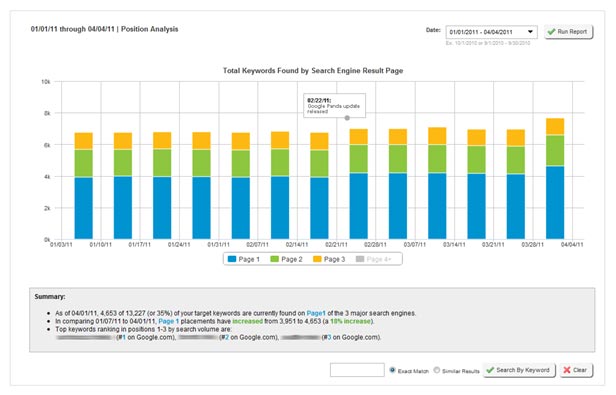
PANDA... A Clue into the Minds Of the Googleplex


In the last month I have written two pieces on Google's PANDA algorithm "upgrade".

The first piece release shortly after the algorthm was released was from an analysis on SEOmoz. The second was an allegory of Google's behavior compared to Coke's ill fated "New Coke" launch from Webpro News.

Well folks - here is another one. iCrossing who describe their services thus:

"Travel to great lengths for your customers. Whether it’s online or offline, your customers want a great travel experience with your brand. Are you living up to the promise? Using iCrossing’s brand monitoring services and social network mapping tools, we can provide a comprehensive, up-to-date scorecard of what’s being said about your brand, and where. Then we devise a strategy to help you counter criticism and improve your image, or play up your strengths when you find customers are responding positively to an aspect of your business you hadn’t considered."

Amongst their clients in the Travel space are:

AAA
Bermuda Department of Tourism
Dollar Thrifty
Fairmont Hotels
Pleasant Holidays
Vail Resorts (including Snow.com)
Virgin Holidays

They have an interesting analysis on their website on how PANDA does actually benefit big brands. Their analysis is from two sectors - travel and banking.

Adding to the analysis WebPro News also pulled some archive video from the guy some of us like to hate Matt Cutts - who is the Googleplex's point man on search design.

My point however is to connect some of the dots. Google is position itself to be more attractive to the bigger brands for a reason. I don't believe that this is just happenstance. Smaller universe to control could be just one of the many possible reasons.

For Travel it means that the tight inventory of Web Real Estate is about to get tighter which in turn drives up costs and rates - AND revenues for the Googleplex

In my view the evolving vision gives the Googleplex everything it wants. Let's watch out - this could be a portent of things to come from Google.

Feb22 was no accident, and the favouring of big brands is a focused deliberate act.

Cheers

06 April 2011

Are Social Media Adherents Looking for Love In All The Wrong Places?


I am beginning to think so.

A recent piece in eMarketer on Social Media entitled "What Brand Marketers Expect from Social Media Followers" tries to use some research to draw home the point that
"Brands place value on insights and loyalty, not spending"

Here is an excerpt from the article.

"How much is a brand fan worth? It’s a question some social media marketers have been asking for a while, but research suggests many are moving on from the search for a hard number.

According to a July 2010 survey of social media marketers by Millward Brown and Dynamic Logic, the most valuable aspects of social media brand fans go beyond anything with an immediate monetary value. Increased short-term and long-term spend on the brand were the bottom two results.

At the top of the list were the fan’s value as a source of insight and increased loyalty overall. Advocacy and engagement were also important to at least three-quarters of respondents"

Interesting. The conclusions drawn from the study doesn't make much sense to me. Perhaps I am too analytical. In my view this is not the smartest view. While experimentation is good and there are not good metrics in place - that is still not a good enough reason to trust things like the "Like" and "Fan" buttons.

I have said many times before that using the Fan numbers and the assessment of the "Like" button is ignoring the Pavlovian nature of the online consumer.

Time for us to grow up. As Facebook has just shown us with its privacy setting change - they can and will change the game... and frequently.

You have been warned. Look for love and reality in the real places.


Here is a 1979 Ad for Nike.

05 April 2011

They Are Smoking Things At Sabre Central


A great post by Dennis Schaal of Tnooz today on the GDS Have vs Have Nots.

In case anyone should now doubt the airlines resolve to break down the restrictive and expensive nature of the GDS model - they can see now that AA was the one that pushed the envelope. Now it has its policy if not vindicated then at the very least validated.

So what of the other side of the argument? Sabre put on a brave face and proceeded to rubbish any idea that the AA+EXPE deal was anything but a reaffirmation of the GDS model. The Sabre Peep commented:

“GDSs already have aggregation technology — that’s what we do — aggregate content in one place,” St. Pierre says. ”We already aggregate AA’s content, along with hundreds of other airlines. As such, there is no need for a one-off direct connect.”

And this perhaps underscores the legacy GDS head in the sand approach.

Hello is anyone dealing with reality over there in South Fork (aka Southlake TX).

This is not about the single battle between AA and one GDS. It is about driving innovation in distribution and lowering the cost by reducing or better eliminating the hidden tax that the GDS fees impose on the consumer. It is about giving the consumer choice.

I find it hard to believe that Sabre doesn't get this. However I do believe they are actually harming their credibility long term by not coming to the market with pragmatic and more honest approach to providing the value to the intermediaries and the airlines.

Let's hope they try and treat the marketplace with a little more deference and give the travel distribution community some acknowledgement for having a brain.

Cheers

04 April 2011

Migration for Magazine and Newsprint Players Not Fast Enough

This is a follow up to my piece last week...

It seems there is more evidence to support the stupid theory.

Like many things today - the explosion of online information - most of it free has changed the way we consume information. But we have yet to figure out the way to monetize this.

Well our friends over at eMarketer are not going to make you any happier with this piece. The expenditure in online consumption is not keeping pace with the loss of traditional media forms revenue.

I don't think they are going to ever get it. The stupid is that the publishers are trying to restrict the way we consume media on these new digital devices. In my view the lazy way is one use one device vs my preferred choice - and that of most people which is one use one user.

Consider this if you will. I have a portable form of a copyright material. I can play my CD or my DVD on any machine I choose (provided that it has the right play system on it!!!). Ditto for the prior issue of cassettes and vinyl. Today's media products are far more portable but some stupid publishers are trying to restrict how we consume.

Guys get with the program. You can do a better job than this. Don't kill the fatted calf.

Just my advice. Its free - you may now go about your daily chores.

Cheers

Hello Remember Me?


Yes this is about ME!

With thanks to the Baby Boomer Network for the image!

So this is not about you this is all about me today. Marketers in the rush to own the next gen of Digikids have been avoiding the Boomer Generation that has powered the growth for well nigh on 30 years. As we (yes I am one) start to leave the active market we are being replaced by a bunch of ADD scatty kids. Don't get me wrong - I love them.

However we do need people to remember us old timers. We still have a lot of clout and cash to spend. And we are willing to spend it (No matter what our kids and grandkids are thinking). That old story about he with the most toys wins, nope we are now into experiences. Travel we are going to keep on doing that till we just physically cant.

Cheers

Have You QR'd Today?


Almost everywhere I turn I see QR codes.

Seems I am not imagining things.

This remarkable piece of low tech is rapidly gaining traction. One of the key drivers is the Arrline 2D barcode application.

I believe we will see many other forms. With Apple's iTravel patent application trying to stifle market for Non Apple based technologies - this lovely piece of low tech is going to provide a wealth of opportunity to the general public. The adoption of smart phones and the growth of the print or physical presence of the QR code makes for a happy marriage.

Still Google is trying to get into the act by co-opting the standard. Don't put up with it. Just make sure that your applications can be read easily. The adoption will be fast and broad based. Check out this story in eMarketer.

Cheers

Boeing Sends A Chilling Message To Suppliers


In an headline article in today's Seattle Times Business Section a Boeing Exec is profiled. She comes from a storied family. Nicole Piasecki comes from one of the pioneers of Helicopters.

Today she sits in quite a powerful position at Boeing where she is a senior member of the team evaluating what to do next with the 737. Boeing has long since given up trying to convince everyone that the 737 just needs another tweak. I doubt we will ever see a Boeing 737-1000. But the new aircraft will likely be 797, the large diameter of the next gen engines has precluded anything along those lines. At the moment Boeing is trying a whole range of things out on the public. The most radical is that a little twin aisle fat albert replacement aka 787 lite is the one they are trying out on us.

Please read the article. There is a chilling statement/threat in the article despite the nice smiling face of the lady who was the subject of the article.

'Piasecki said Boeing will strive for a more exclusive relationship with future partners, suggesting that those who also do work for rivals like Airbus may lose favor.

"Some of our very close suppliers are spending a lot of time developing stuff for other competitors. They are spending resources on others, not on us," she said. "We'd prefer that they work with us, and ... share and invest in technology for our advantage."'

Clearly a message for anyone. It was not just aimed at Airbus but also at the Canadians (Bombardier), The Brazilians (Embraer), The Chinese (AVIC, the Russians (Sukhoi and others) and the Japanese (Mitsubishi).

The one moment of tension in the article was over the decision to sell Boeing Witchita. A series of questions she sidestepped neatly. The article goes "... she briskly moved on, saying she won't "second-guess decisions that have already been made."

Given her high position inside the Boeing hierachy the question of the next site for Boeing and the unstated issue of the S Carolina facility the article carries on "...
Piasecki said Boeing is studying the possibility of a high-volume aircraft production "supersite," where supplier fabrication plants making airplane sections would cluster near a Boeing final-assembly facility.

She said if Boeing chooses that route, it may set up more than one such supersite to mitigate the risk of having such a key complex subject to disruption by a natural disaster or a labor strike." A clear shot across the bows of the Washington State government and legislature not to mention the unions.

Given that Boeing has sold much of the land around the Renton plant - the chances that Renton will be the site of the assembly of the next 737 is about the same as American balancing the budget. Boeing will go the same route it went through with the 787 and probably string it out a lot. (Lot's of free lunches for Ms Piasecki and her team). Remember that Boeing got to do this twice. Once for the Everett Assembly and then for the "2nd line" in S. Carolina.

"Hello, Boeing, yes Ms Piasecki please ... this is the state of Alabama calling...."

Cheers

Did You Get Spammed Today?

Like many people - I am probably on about a squillion mail lists. So today the revenge of the mail list.

Epsilon who provides email list server services to the whole world was hacked. Congrats to Tivo for being first to act. The others have been not so swift. So I am getting the mails coming in at a rate of knots.

for more on this topic go here.

So now you know!

For my readers outside the USA - let this be a lesson to you. Maintain your own email list.

Cheers